Showing posts with label Amazonas. Show all posts

2012/10/10

I support the Indigenous Cause


In Support the Indigenous Cause

Copyright © Tatiana Cardeal. All rights reserved.

Reprodução proibida. © Todos os direitos reservados.

The model of development that Brazil was rising in the last years could have some strong positive points, but some issues related with the environment, sustainability, violence and disrespect of the Indigenous and Traditional Communities rights (as the Quilombolas - historic afro-brazilian communities) are just going worst.

Last July and August I traveled about 4000km on the Brazilian east boarder, between Bahia' South state and the North of Espírito Santo, visiting many Indigenous and Afro-Brazilian communities (Quilombolas). I was shooting for a research that will be published soon. The main picture is really bad. I also met and interviewed anthropologists, professors at universities and researchers, and what I've seen is disappointment when not revolt.
A meeting formed by a large national group of anthropologists to write a collective manifest for the government was recent planned to happen in Florianópolis. I'll updated about.

You've probably heard about Belo Monte Dam and other projects in the Amazon area, troubles with deforestation, monoculture, and lands issues in the country. The Brazilian Association of Judges for Democracy (www.ajd.org.br) released a campaign named "I Support the Indigenous Cause" and are asking for signatures.

I support the Indigenous Cause
Against the PEC 215 (proposed constitutional amendment)
Demarcation of the Indigenous Lands
Urgency in Court Decisions

There are more detailed information rolling the bar on this link.
I Support the Indigenous Cause
Check the link for other languages:
Português / Español / Français / Italiano / English


If you agree, you can sign the petition that will be sent to the Supreme Court,
the President of the Republic, the Senate and the House of Representatives.

Please, share the campaign with your contacts.

________________________

Eu Apoio a Causa Indígena 

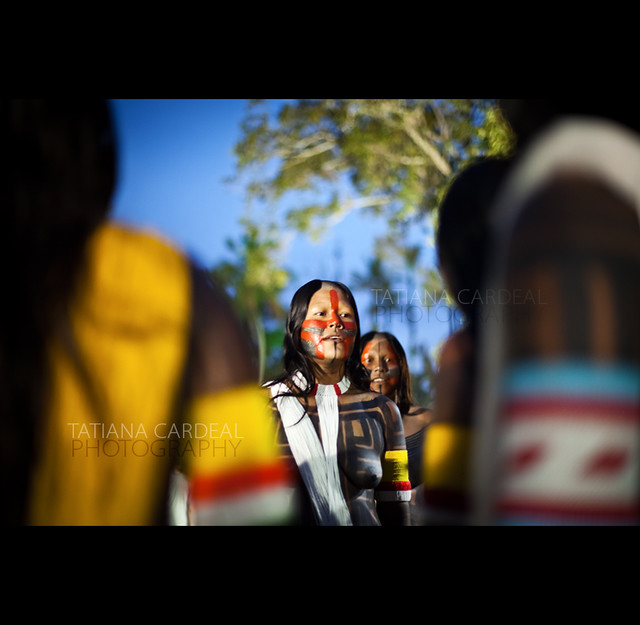
Photo: > Kayapó women were singing and dancing their traditions during the Indigenous National Festival, 2012. Bertioga, SP, Brazil.


2010/06/04

Health and Happiness Project at the Amazon


Plateform published a selection of images from the series I took at the Health and Happiness Project (Projeto Saúde e Alegria) during a few days in the Amazon region. There's also an interview. The link above is for the English pages of the essay (for the French pages, click here).

Use this link to see more about the Health and Happiness Project published at this blog.


> Info:
▪ Projeto Saúde e Alegria
▪ Plateform Magazine
"PLATEFORM est un magazine pour exposer, s'exposer, se raconter et raconter. PLATEFORM ouvre le regard et s'ouvre aux talents. PLATEFORM apporte une double vision sur un thème, un lieu, une émotion, une idée."


2009/09/03

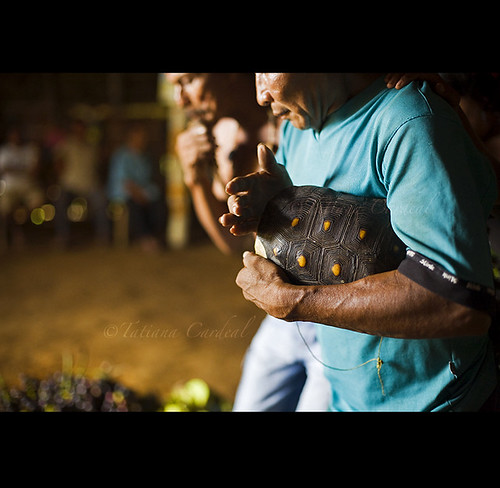
the Jabuti spirit can sing


Copyright © Tatiana Cardeal. All rights reserved.
Reprodução proibida. © Todos os direitos reservados.

Embraced by his friend that was playing the flute, they danced together.
It was the first time I've seen someone playing a Jabuti's (turtle) hull.
The sound was a vibration produced by the friction of his warm hand,
in a constant rhythm, giving me a sense of transe.
Hypnotic and beautiful.

In the House of Knowledge, at São Gabriel da Cachoeira, Amazonas.

2009/07/22

Bará


Copyright © Tatiana Cardeal. All rights reserved.
Reprodução proibida. © Todos os direitos reservados.


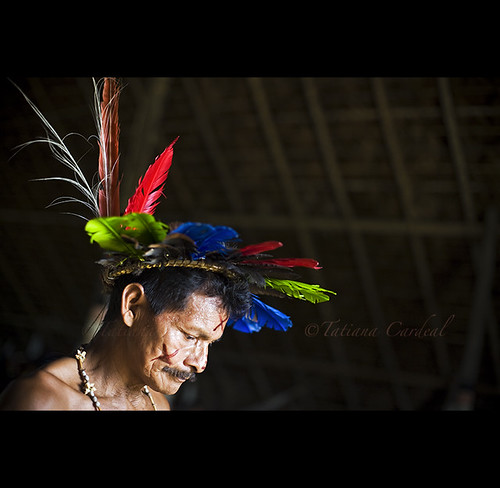
A Bará Indigenous man that is living at São Gabriel da Cachoeira, Amazonas, also found at the Maloca (House of Knowledge) a secure place to express his own traditions and share with others. A way to keep his immaterial cultural alive.

With a peculiar humor, he was listed to me as a 'dangerous indigenous man' by the Baniwa's leader of the community, because he has a mustache (not very usual here).
Bará People are rare in Brazil, a estimative about their group here is about only 39 people. His original tribe is near the frontier with Colômbia, around Papuri river.

São Gabriel da Cachoeira, Amazonas.
+ Info: ISA: Povo Bará

2009/07/16

maloca's gate


Copyright © Tatiana Cardeal. All rights reserved.
Reprodução proibida. © Todos os direitos reservados.


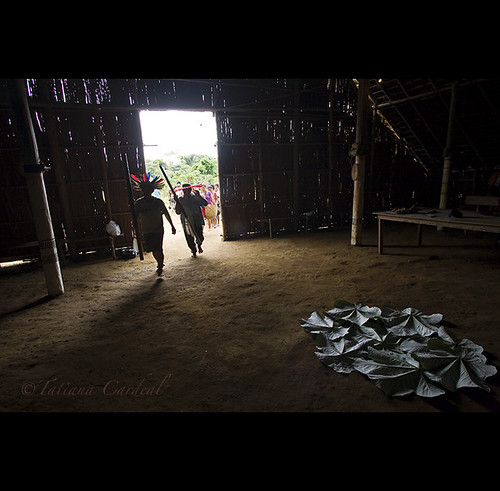
There are 22 familes living at Itacoatiara Mirim, a Baniwa Comunity around São Gabriel da Cachoeira. To recover their traditions after leaving the original tribe, they built this "Maloca", also knowed as House of Knowledge.

"House of Knowledge is an area of transmission and learning of the traditional culture for those who do not know or forgot. It's to talk, tell stories of past, reliving the custom to eat together. A place to dance, make instruments, showing the young our culture" explained Mestre Luiz Laureano, community leader. "The House of Knowledge is also to receive relatives who come from the original tribe to share with us the stories of our family who were there. Is a school that will pass knowledge. "

São Gabriel da Cachoeira, Amazonas - Brazil.

Info | ISA - Índios e a Casa de Conhecimento

2009/05/31

curandero


veins as rivers

Copyright © Tatiana Cardeal. All rights reserved.
Reprodução proibida. © Todos os direitos reservados.

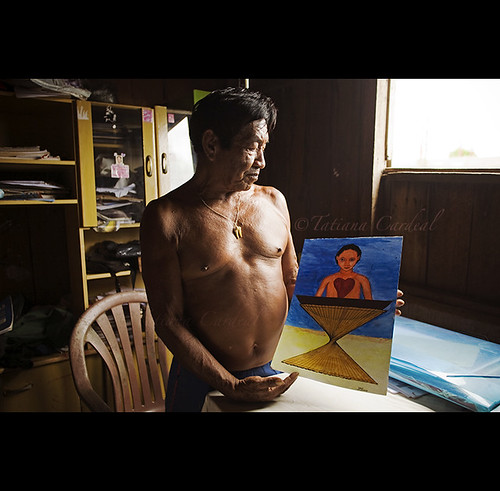
Seu Feliciano showed his visions and paintings,
his heartfelt fields of reality, a magic world.

Feliciano's veins,
rivers of dreams and spirituality.

Feliciano Lana is a Desana Indigenous, a story teller,
a healer and a visual artist, living in São Gabriel da Cachoeira,
beside the Rio Negro river, at Amazonas state.

2009/04/26

burn it blue


out of water

Copyright © Tatiana Cardeal. All rights reserved.
Reprodução proibida. © Todos os direitos reservados.


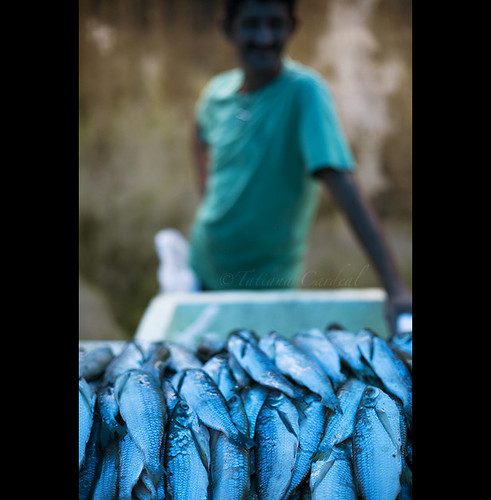
Free market, at São Gabriel da Cachoeira, Amazonas.

The Negro River doesn't have a generous offer of fishes, and the people living at São Gabriel, almost 1000 km far from Manaus, still receive a lot of needs from this city. A long journey by boat that takes 4 to 7 days.

In the free market is possible to find a few fresh things, like fish, flour, cassava, some local fruits... but food can be a hard thing. In this city where mostly of the population (99%) are indigenous people, they've been serious afraid about climate changes. The river was too high to start working on the plantations, the fish are poor, and a single can of milk costs at least $5 dollars, when you can find it.

2009/04/22

one third


one third, originally uploaded by Tatiana Cardeal.


In the next 20 years, the amount of water available for each person
in the world will be reduced by one third.
Today we have 6.5 billion people in the world, and of these,
2 billion have no access to drinking water.
In Brazil, 22 million people lack access to drinking water.

Rio Negro (Black River), Amazonas -Brasil.

2009/04/21

behind us


Copyright © Tatiana Cardeal. All rights reserved.
Reprodução proibida. © Todos os direitos reservados.


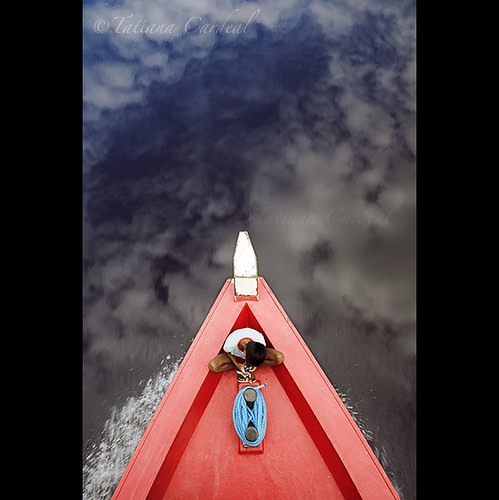
Rio Negro (Black River), Amazonas -Brasil.

2009/04/16

melted time


Copyright © Tatiana Cardeal. All rights reserved.
Reprodução proibida. © Todos os direitos reservados.


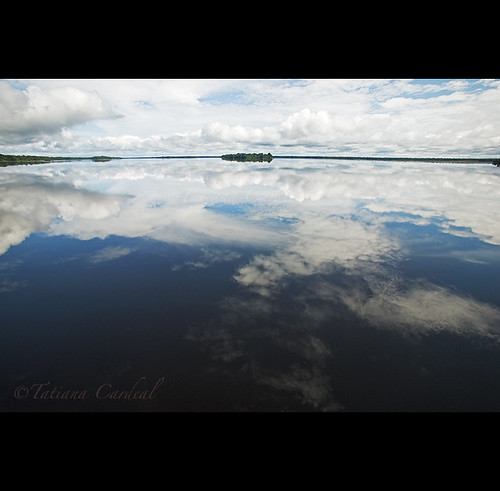
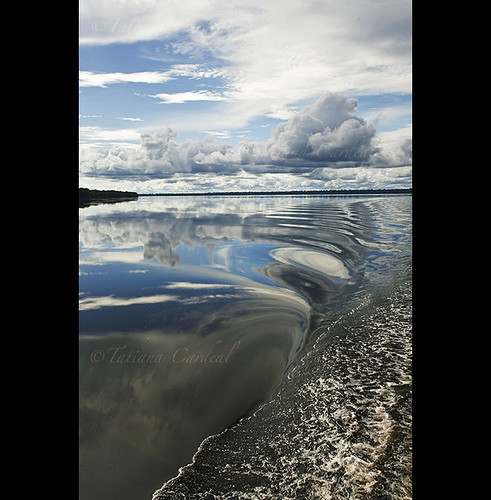
Waters cross borders, linking us together.


Last February, Rio Negro has reached the highest level in 106 years.
Everything were under water.

Rio Negro (Black River), Amazonas -Brasil.

2009/03/24

day dreaming


Copyright © Tatiana Cardeal. All rights reserved.
Reprodução proibida. © Todos os direitos reservados.


A few weeks working in Amazonas made me dreaming
more than all those years of wait and wishes to be there.

Rio Negro (Black River), Amazonas -Brasil.