Showing posts with label social changes. Show all posts

2012/09/24

Santiago, Chile: ACTIVISTA Exhibition


No, I'm not dead. I just have been very negligent with my blog, I now.
But here I am, filling the black screen with some news and not so news. 

First thing to tell you: I was featured at Citypulse ACTIVISTA issue, released in mid-March. The issue presented 16 pages with an overview of my photo work during protests from 2000 to 2011. I will add some on this blog soon, but now the most important: if you are around Santiago during September and first week of October, this should be the last weeks to visit the ACTIVISTA Exhibition at the PUMA LAB and check some of my photos there.


ACTIVISTA - The Exhibition

Santiago, Chile

Includes part of the Citypulse collection: conceptual photography, audio and video developed by this international group, portrays the social movements that are multiply throughout the world, gaining a decisive role in the expression of citizens locally and globally. The work is structured from the eyes of 44 artists from 16 countries, who shape multicultural track the phenomenon from an experimental perspective. This record includes a book, a video (pre-released in August this year at the Festival of Aarau, Switzerland), a photographic collection, a website, and geolocated platforms with audio and video recording. Additionally, the photographic pieces exhibited in PUMA LAB include augmented reality interface that allow viewers to explore the complete works pointing their mobile images displayed.

September 5th to October 7th
GAM - Centro Cultural Gabriela Mistral - PUMA LAB
Avenue L. B. O'Higgins 227, UC Metro
Parking Subt. by Villavicencio 354
Santiago, Chile

activista.citypulser.com

Soon, more updates!


Inauguración EXPO ACTIVISTA! from PUMA LAB on Vimeo.
Inauguramos la exposición ACTIVISTA! en PUMA LAB que incluye parte de la colección conceptual de fotografía, audio y video desarrollada por Citypulse y que retrata los movimientos sociales que se multiplican a través del mundo, adquiriendo un rol determinante en la expresión ciudadana a nivel local y global. Ojo con la interfaz de realidad aumentada que contienen tanto las fotos como las postales de la EXPO, que permiten a los espectadores recorrer la obra completa apuntando sus móviles a las imágenes expuestas.


2010/06/08

the things they said


edited: I had to removed the direct link for this video as it was making the blog too slow.

You can watch this cool video from Survival at this link.

For brothers and sisters.
.
.

2010/05/23

Chinese memories

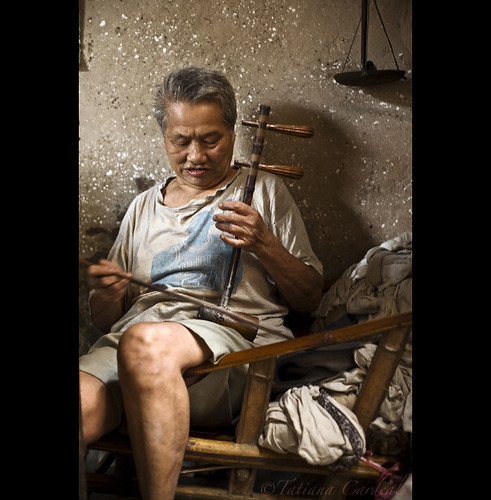
playing erhu
Copyright © Tatiana Cardeal. All rights reserved.
Reprodução proibida. © Todos os direitos reservados.


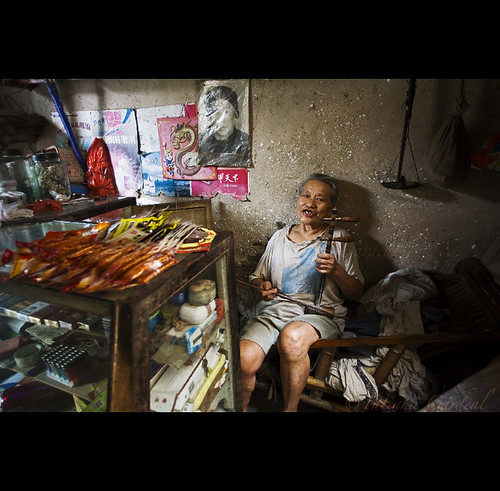
Walking at Fuli Ancient town alleys, I heard a music coming from an open door.
It was a small shop at a home, selling lighters, soap, cigarettes, candies... little things of everyday life of the village.
I though it was a radio playing an old Chinese song. Curious, slowly, put my head inside. I discovered that the beautiful song was coming from the her, the owner.

No spoken words, but a body language talk, the lady allowed to shot her portraits while I was fascinated with the magic sound of her handmade erhu, the scenery, it's particular smell, and well... her Chicago Bulls, Michael Jordan's 23 t-shirt.
Relaxed, concentrated on the music, almost ignoring my presence, she didn't stop a second.
It was impossible not start wondering about how the fast Chinese development will affect these people, the town, their culture.


The Erhu
The story tells that during the decades of 30 and 40 of the last century, at the Chinese city of Wuxi, a blind street musician was always seen playing an instrument with two strings and begging on the streets. Passers-by delighted with those tunes, stopped to listen.

The artist began to be known as "the Blind ABing". The instrument he played was the famous Erhu, also known as Chinese violin. Even today, whenever people talk about the erhu, they also speak of the Blind Abing, the two are inseparable in the minds of many Chinese.


the singer owner

back in the time
Copyright © Tatiana Cardeal. All rights reserved.
Reprodução proibida. © Todos os direitos reservados.


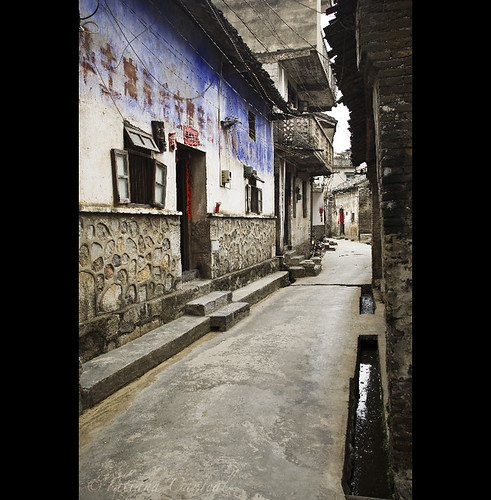
Fuli is a Ming Dynasty town built on the Li River's northern banks.
The village has a history of 800 years, narrow, winding cobblestone streets and ancient temples.


> Alley at Fuli Ancient Town, Guangxi Zhuang Autonomous Region, China.


2010/05/02

Exhibition "Education is a right: non-discrimination in Latin America and the Caribbean"

brazilian children's day
Copyright © Tatiana Cardeal. All rights reserved.
Reprodução proibida. © Todos os direitos reservados.


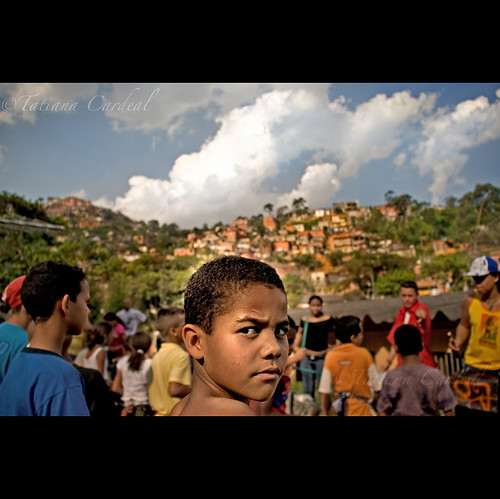
I made this picture a few years ago (2005), during the Brazilian celebration of Children's Day, where the ngo Children at Risk Foundation (CARF - Rede Cultural Beija Flor) developed a series of educational and cultural activities with children and youth in the region of Diadema, periphery of Sao Paulo.

This picture and the following two images, relating to the same topic, will participate this month in an exhibition that depicts the diversity within the school environment in Latin America and Caribbean.

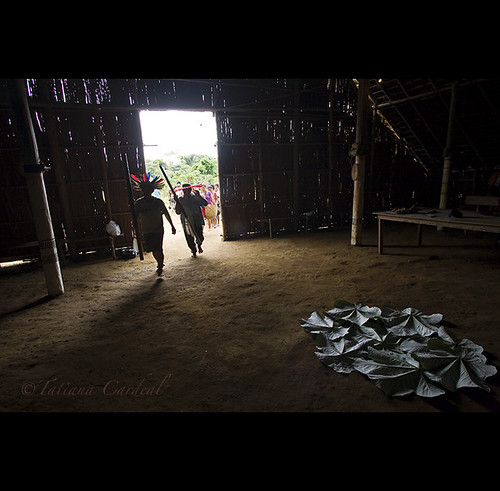
maloca's gate =O)

"Held by CLADE in the campaign for non-discrimination in education, the traveling exhibit will bring together 36 images captured in different countries.

Give visibility to the issue of discrimination in education is crucial in order to recognize its existence and to think of ways to overcome this reality. In Brazil, for example, 97% of people recognize have some kind of prejudice against different groups in the school environment (FIFE). Thinking about it, CLADE held at the Memorial da América Latina a photographic exhibition in May.

With the theme "Education is a Right: the Non-Discrimination in Latin America and the Caribbean", the exhibition curated by photographer Maíra Soares, which brought together 36 images by clicking the various countries of Latin America and the Caribbean by names such as Brazilian photographer Gilvan Barreto and Argentina's Néstor López. The launch of the show, May 3rd, follows the opening of the 6th Assembly of CLADE.

The realization of the right to education for indigenous and Afro-descended, by people with disabilities, persons deprived of their liberty, pregnant teenagers and adults as well as the contexts of the field and on the periphery of cities are represented through the images. Wins highlighted the current situation in Haiti.
"The pictures show scenes of everyday school life in many parts of Latin America and the Caribbean, giving visibility to the reality of groups and individuals who have been systematically discriminated against, in and out of education. Thus, while the exhibition wants to celebrate the difference, you also want to point out the challenges that remain, even 10 years after the commitments to Education for All signed in Dakar, so that the right to education is realized for all people" says Camilla Croso, general coordinator of CLADE.

On May 6, from 10am to 12pm, the event has the participation of the UN's special rapporteur on the right to education, Vernor Muñoz, receiving the public, especially students and tutors, for a discussion of the topic discrimination in education.

In theaters until May 29, the exhibition is touring and will be displayed later in other countries of Latin America and the Caribbean."
(text: website from CLADE campaign)

Exhibition:
"Education is a right: non-discrimination in Latin America and the Caribbean"
At the Memorial of Latin America from 3 to 29, May, 2010.

Other images from this exhibition and media news (Brazilian links):
• Exposição discute discriminação na educação na América Latina e Caribe - Notícias R7
• Encontro debate educação na América Latina e Caribe
- Educação IG
• Exposição mostra a realidade das escolas da América Latina -
Educação UOL


2010/02/23

natural lotus feet


Copyright © Tatiana Cardeal. All rights reserved.
Reprodução proibida. © Todos os direitos reservados.


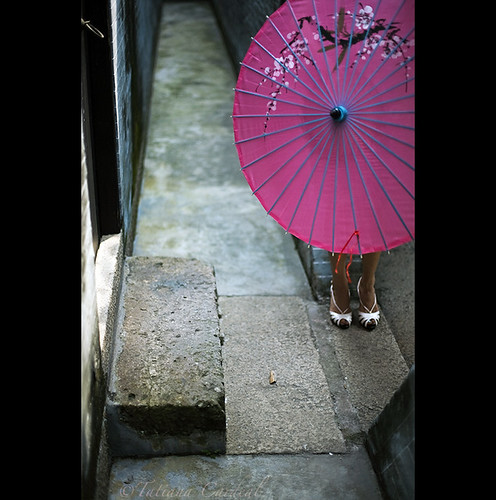
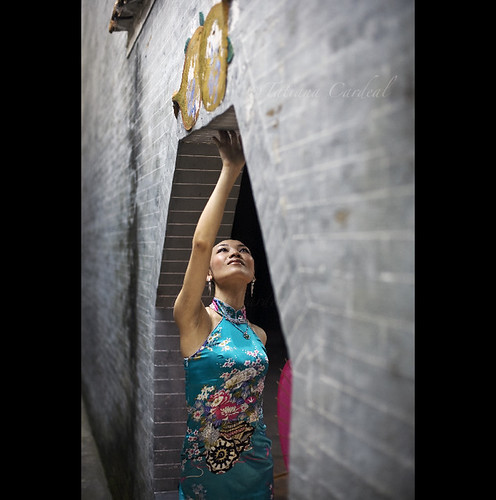
Until the early 1930's was still possible to find a large majority of women in middle age living with visible effects of the Lotus shoes practice, where the feet were heavily bandaged to limit their growth. Known as Lotus shoes, this social practice began in the Chinese court in the twelfth century, and then reproduced by the peasant masses who imitated the elite.

This subjection of women, very painful and disabling, generated a high-cost mental, social, and that somehow reminded me of the beauty standards that are still imposed by our actual society on women, eight centuries later.

> delicate natural feet on sandals, at a village on the suburban area of Guangzhou city, China.

female mysteries

delicate chinese

Copyright © Tatiana Cardeal. All rights reserved.
Reprodução proibida. © Todos os direitos reservados.

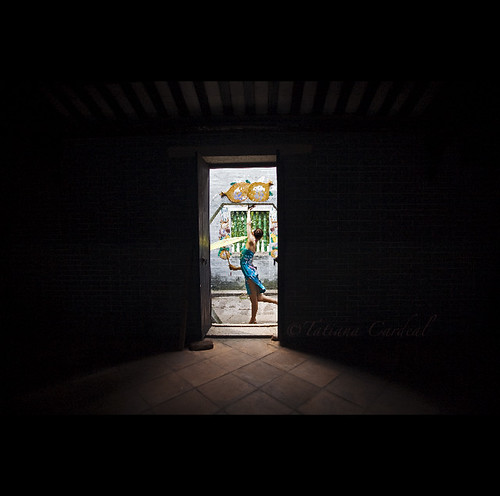
> Through the door of the temple, village on the suburban area of Guangzhou city, China.


2009/09/03

the Jabuti spirit can sing


Copyright © Tatiana Cardeal. All rights reserved.
Reprodução proibida. © Todos os direitos reservados.

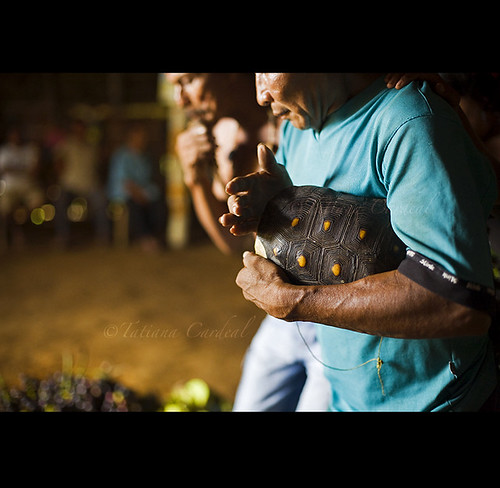
Embraced by his friend that was playing the flute, they danced together.
It was the first time I've seen someone playing a Jabuti's (turtle) hull.
The sound was a vibration produced by the friction of his warm hand,
in a constant rhythm, giving me a sense of transe.
Hypnotic and beautiful.

In the House of Knowledge, at São Gabriel da Cachoeira, Amazonas.

2009/07/22

Bará


Copyright © Tatiana Cardeal. All rights reserved.
Reprodução proibida. © Todos os direitos reservados.


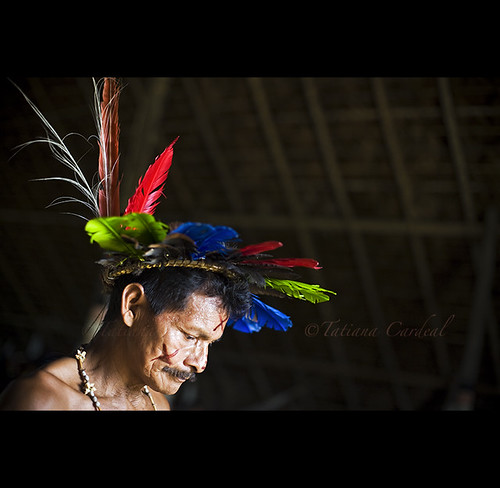
A Bará Indigenous man that is living at São Gabriel da Cachoeira, Amazonas, also found at the Maloca (House of Knowledge) a secure place to express his own traditions and share with others. A way to keep his immaterial cultural alive.

With a peculiar humor, he was listed to me as a 'dangerous indigenous man' by the Baniwa's leader of the community, because he has a mustache (not very usual here).
Bará People are rare in Brazil, a estimative about their group here is about only 39 people. His original tribe is near the frontier with Colômbia, around Papuri river.

São Gabriel da Cachoeira, Amazonas.
+ Info: ISA: Povo Bará

2009/07/16

maloca's gate


Copyright © Tatiana Cardeal. All rights reserved.
Reprodução proibida. © Todos os direitos reservados.


There are 22 familes living at Itacoatiara Mirim, a Baniwa Comunity around São Gabriel da Cachoeira. To recover their traditions after leaving the original tribe, they built this "Maloca", also knowed as House of Knowledge.

"House of Knowledge is an area of transmission and learning of the traditional culture for those who do not know or forgot. It's to talk, tell stories of past, reliving the custom to eat together. A place to dance, make instruments, showing the young our culture" explained Mestre Luiz Laureano, community leader. "The House of Knowledge is also to receive relatives who come from the original tribe to share with us the stories of our family who were there. Is a school that will pass knowledge. "

São Gabriel da Cachoeira, Amazonas - Brazil.

Info | ISA - Índios e a Casa de Conhecimento

2008/10/05

Spreading the history

James Nachtwey reveals his TED Prize wish.
The issue is Tuberculosis, which has been mutating because of inadequate treatment in a new form: Extreme Drug Resistant Tuberculosis.
James worked the past 18 months to document its impact, and now it's making a call.


Visit xdrtb.org for more details and to take action.

2008/07/22

Prestes Maia | Opening in Los Angeles August 9th


Solo Exhibition
Prestes Maia:

Opening August 9 6pm to 8pm

August 9 to October 3 2008

Alegria Gallery
2737 W Sunset Blvd
Los Angeles, CA 90026
323.454.4200
9to5 MF


A Diary of Exclusion

The Alegria Gallery, from Art and Shelter, will be exhibiting a group of photographs from the Prestes Maia essay. These images are fragments of a visual diary that I have been keeping at the Prestes Maia occupation at the heart of the city of Sao Paulo, during almost three years (2005 to 2007).

The site was considered the largest vertical occupation in Latin America. The building was an old textile factory abandoned more than 20 years ago, and the owners owe millions in taxes to the municipal government. Some 2.000 people were living there, members of the Downtown Homeless Movement, which is led by 10 women from various occupied sites in the city. The groups, well organized and articulated are formed by thousands of people who formerly lived on the street, in squares or under bridges and overpasses. Like an army without shelter, they founded the Homeless Movement not only as a way to struggle for the right to housing, but to restore their own dignity, unraveled by lack of care and social segregation.

There is tremendous prejudice in Brazil against the homeless, who are often accused of being "rabble rousers" and "invaders" of empty and abandoned buildings.There are more than 400 sealed or under utilized buildings in downtown Sao Paulo. It is in these locations that the homeless want to live. Nevertheless, in recent years, "urban revitalization" projects have given emphasis to raising real estate values, and there is no room for the homeless. They are evicted towards the periphery or sub-human life in cortiços – precarious urban dwellings with many residents in tiny spaces. These revitalization projects sponsored by the city government and private companies (
pressure of property speculation) do not give priority to reducing inequalities, but to exclusion, a social apartheid, which often includes violent actions from shock troops, security forces and private security.
These images seek to show that the homeless are honorable people seeking the inalienable right to a dignified life.


Prestes Maia Occupation now

After almost 5 years of occupation, constants suspensions of evictions, national and international mobilizations, in May 2007, a meeting joined leaders from federal, state and municipal sphere, giving a new direction for the Prestes Maia families. After negotiations, a progressive and pacific withdrawal happened and the occupation was closed.

Many had moved to other buildings, small apartments at city's downtown with a provisory support of the federal government, and are still waiting the promise of the negotiation: reform and rent for fair values social habitations for them . Other group of families accepted the offer to move out of downtown, to live in the periphery of the city. Some other families just moved to other occupations from the Homeless Movement in the city, and continue fighting.

Since July, 2007, the Prestes Maia building is still closed, sealed with concrete blocks.

These photos are fragments of this history of S o Paulo society, where I was born. They are not only testimonies, but also elements of communication that I hope can raise awareness and promote the approximation of social classes. They strive to contribute to the transformation of urban space into a location that does not segregate, but to the contrary, unites people around a common good.

2008/06/04

exploring


Copyright © Tatiana Cardeal. All rights reserved.
Reprodução proibida. © Todos os direitos reservados.


New angles for a visual language, as an offer,
to communicate how we see and feel the world to others


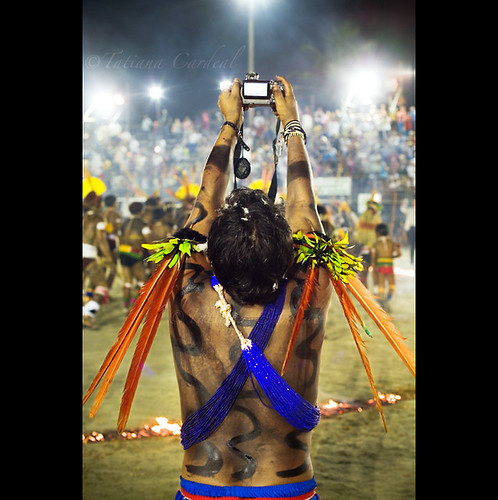
A young Yanomami photographing the cerimonial dance of the Xingu Nations, at the VIII Indigenous Festival.

2008/05/19

forever


Copyright © Tatiana Cardeal. All rights reserved.
Reprodução proibida. © Todos os direitos reservados.


Girls Gavião Kyikatêjê.
They are Hãwykyderi and Purukwyi.

I saw them enjoying their own picture in a small digital camera,
I instantly aimed my camera,
they instantly aimed their eyes for me
.
.

a picture forever
in my soul

2008/05/18

the development


Copyright © Tatiana Cardeal. All rights reserved.
Reprodução proibida. © Todos os direitos reservados.


and social changes...
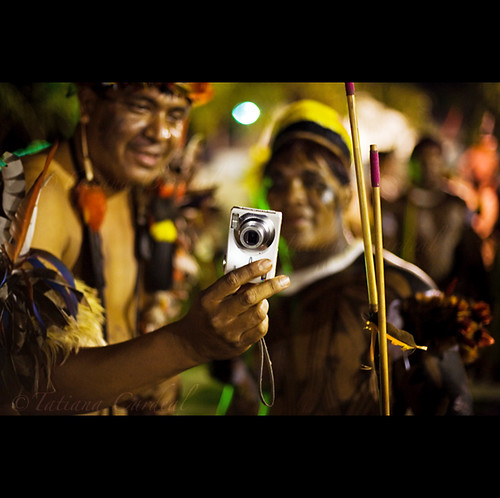
cameras and arrows.

About some things, I feel so lucky to be a testimony.
.
.

Finally, many Brazilian Indigenous People from different groups
are discovering the photography and having access.
Finally they will be able to be the
protagonists of their own history.

Here a Wapishana men shows their own picture to a Kuikuru man.
It's so clear why we all love development...

2008/05/16

in the dark


Copyright © Tatiana Cardeal. All rights reserved.
Reprodução proibida. © Todos os direitos reservados.


I was inside the cabin when I saw this Pareci (Haliti) woman
during the Indigenous National Festival, 2008.
.
.

Marina Silva, the last environmental voice of resistance in Lula's government resigned this week as Brazil's environment minister. She says she lacked the necessary political support to protect the Amazon.
She was the only voice defending that the Brazilian economic development can't be obtained at any price, specially the fragile Amazon area, while the social politics of the government are pressuring all to create a big show using the "PAC" (Programme for Accelerated Growth), to produce the illusion of a developed and emergent country.

"Brazil is losing the only voice in the government that spoke out for the environment," said Sergio Leitao, director of public policy for Greenpeace in Brazil. "The minister is leaving because the pressure on her for taking the measures she took against deforestation has become unbearable."

National and international agribusiness men, woodcutters, transgenics producers, miners owners, large constructor companies and the rural bench are all celebrating.

I'm feeling as an orphan.

2008/03/25

Native Medias / Mídias Nativas


Here are some images of the II Native Medias Seminar, São Paulo.
Sadly I couldn't follow all the activities and all the meetings, but here are some pictures of participants at the first two days, and links to blogs and websites with information about what were showed at the Seminar:

Massimo Di Felici - Cepop/atopos

Gaspar - Z'Africa Brasil

Atiã Pankararu - Rede Índios Online

Eliezer Santos e Ronaldo Costa - Canal Motoboy

Marcos Terena - Memorial dos Povos Indígenas

Olívio Jekupé - Literatura Indígena

Sérgio Vaz - Colecionador de Pedras

Tio Pac - Filmagens Periféricas

Alessandro Buzo - Suburbano Convicto

Tião Nicomendes - Diário - A realidade das ruas de São Paulo

Yakuy Tupinambá - Índios Online

2008/03/24

protagonists of their own history


Copyright © Tatiana Cardeal. All rights reserved.
Reprodução proibida. © Todos os direitos reservados.


I took this portrait at the VII Indigenous Festival, 2007, where for the first time I was working beside a Kuikuro and a Xavante videomaker, a Karaja photographer and a Yudja sound recorder. Documenting the Festival since 2005, this was the first time that I've worked with a group of Indigenous People documenting their own Festival, and this certainly means a strong cultural change.
I usually show links (at the right column of this Blog) for other Natives Blogs and websites, and they have been increasing fast.

Soon, I hope they will be able to show to the world their own productions and finally their own vision of history, something that is really missed in Brazil. They will also be able to develop more structures to defend themselves and their autonomy.

Here goes some interesting information (sorry, it's my translation) from the USP website (University of Sao Paulo), wrote originally by Francisco Angelo, about the seminar that is starting tomorrow, the II Mídias Nativas (II Native Media), that will join Indigenous cultural producers, professors and media cultural producers from communities, living at the periphery and inequality of Sao Paulo:

"To create a site or blog showing his life or produce a short video and placed it on the web are now more than common practice for most young people of large Brazilian cities. But what we would say if it was done by bloggers and videomakers from indigenous communities of the Amazon or Canada? There are these processing experiments possible by new communication technologies that will be presented at the second edition of the Native Media, seminar which will be held in Sao Paulo between days 25 and March 27.

In the event, designed by the Research Center of Public Opinion in Contexts Digital (Cepop / Atopos) of the School of Communications and Arts (ECA) of USP, members of ethnic groups such as Guarani, Terena and Xavante will share their experiences media, which are the publication of books, production of radio programs within the villages and reach the digital production more explicit, such as CDs, Websites, Nets and blogs. Also will be present representatives of natives from Canada, where similar projects have been developed by the people Algonquines and Atikamekw.

"What is happening today is a revolution. It is the power of the press ", defines Massimo di Felice, a professor of ACE and one of the organizers of the meeting. For him, the new digital communication technologies represent an unprecedented experience for people before "invisible" as the locals: to be the protagonists of their own history. "For 500 in many years, the Indians in Brazil were the object of policies on the part of governments, FUNAI, NGOs. Today, with the help of the Internet, they have the opportunity to make direct diplomacy, without the intermediation of the organs and entities that tutelage. They even disclose their texts, their culture, and come in contact with international organizations, for example. "

Indigenous People and young population from the periphery
At the first Native Media, which occurred in 2006, several texts of indigenous authors then presented were gathered and published in Italy, in the form of the book Indiografia. This second edition of the event has broadened the issue of indigenous peoples also for the young people of the suburbs of large Brazilian cities, as Ronaldo Costa and Elieser Santos. They created the Canal do Motoboy, a virtual daily journal where motorcyclists write and publish photos generated by mobile phones on their day-to-day in the middle of the chaotic transit of Sao Paulo city.

For Di Felice, this is a clear signal that the role electronics that are changing indigenous people is a fact worldwide. "Today, any individual can produce their own content and make it available online for the whole world. This reverses the various models of communication classic which separated clearly an emitter, the 'owner' of the information, the receivers, "says Massimo.

Apart from the changes in culture communicative, Massimo also points to a qualitative change of citizenship. The web, he said, allows people who live in the same locality is aware, to organize themselves and, above all, create ways to act on the environment in which they live. "The digital culture is promoting an activism, with implications, I would say, for the explosive politics. People are going to have a relationship of direct action on its territory, without going through the traditional forms of authority. It is a production of a new form of citizenship, more collaborative and participatory, ".

2008/01/28

Another Periphery is possible, necessary and urgent

brazilian children's day

These are some portraits of the youth in places that I've been working at the urban periphery of the mega city Sao Paulo, where art have been a strong tool to improve social development and fight against the effects of inequality. Some images were made during the Sul Social Forum, at Jardim Angela, and others, at Espaço Cultural Beija-Flor, Diadema. I wonder how would be this city, if we were able to have a garden of cultural centers in all the periphery, encouraging and giving access to so many talented artists we have.

Black Conscience National Day conscientious ✮✮✮✮✮ challenge
Tribal Union possible world in my country world possible
Copyright © 2007 Tatiana Cardeal. All rights reserved.
Reprodução proibida. © Todos os direitos reservados.

2007/05/03

Yudjá song's guardian


Yudjá songs guardian, originally uploaded by Tatiana Cardeal.

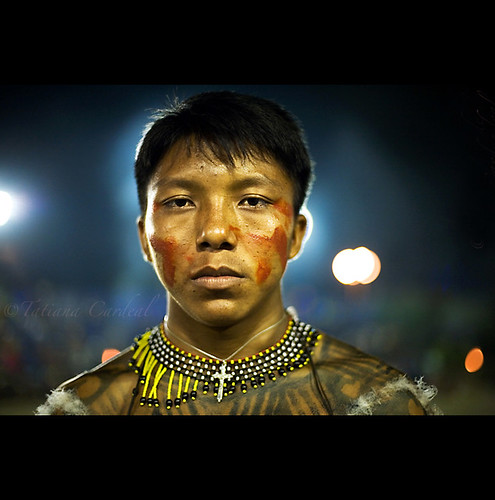
Yudjá, also called as Juruna people, portray themselves as the prototype of humanity, as canoeists and beer makers. Part of the Yudjá's cosmological knowledge and ritual life rests on the crucial role of shamans; however, since the 1980s, they have had no more shamans. He worn a crucifix, and so many things have changed in his culture.

* when he posed for me, I though about a guardian spirit, and I couldn't understand why. Later, I saw him recording the chants of the festival.
Shall he be the song's guardian.