Showing posts with label Xingu People. Show all posts

2011/02/02

Back to the point: Belo Monte Dam

warrior's light
Copyright © Tatiana Cardeal. All rights reserved.
Reprodução proibida. © Todos os direitos reservados.


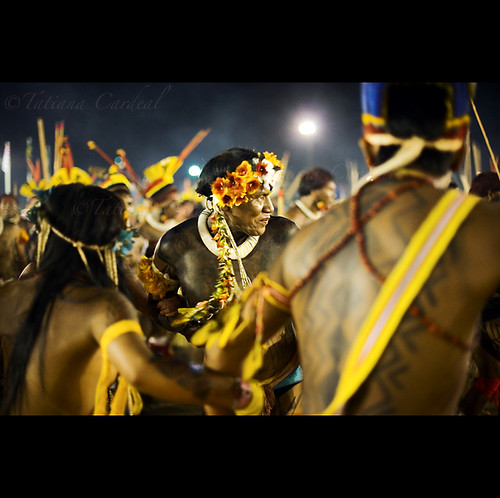
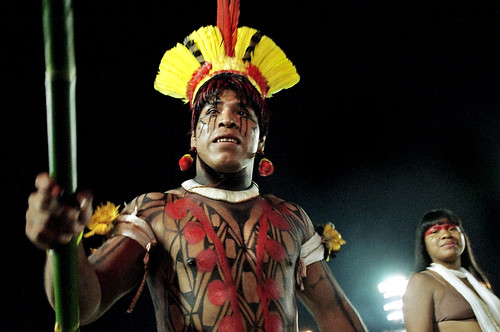
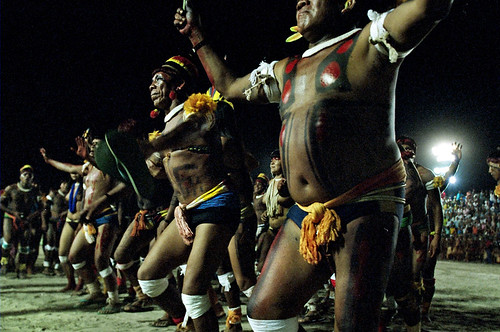
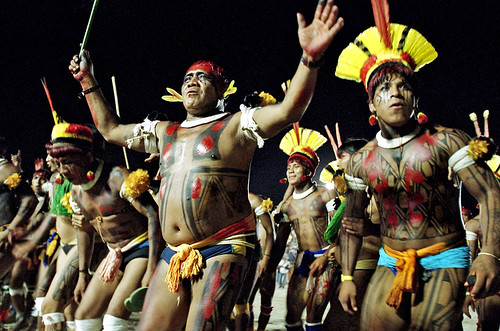
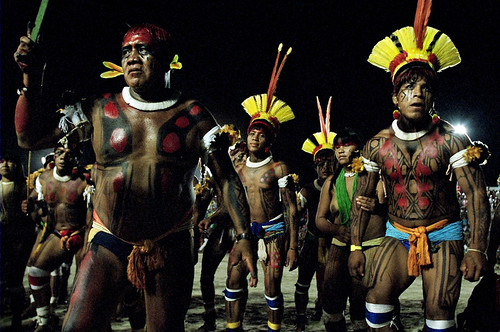
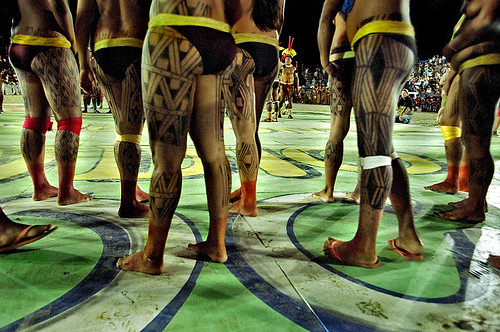
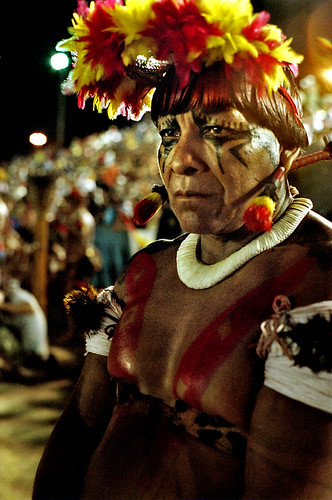
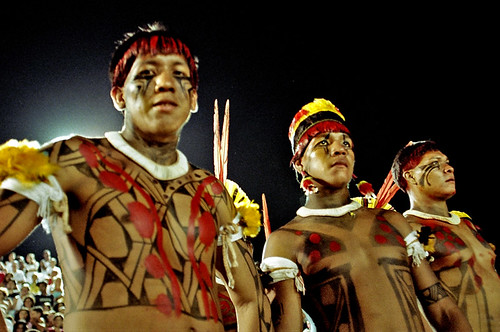
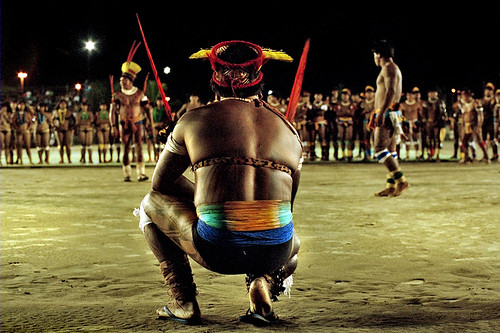
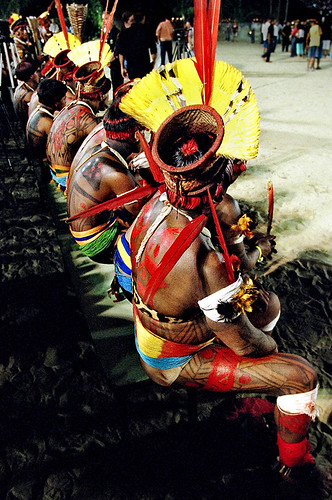
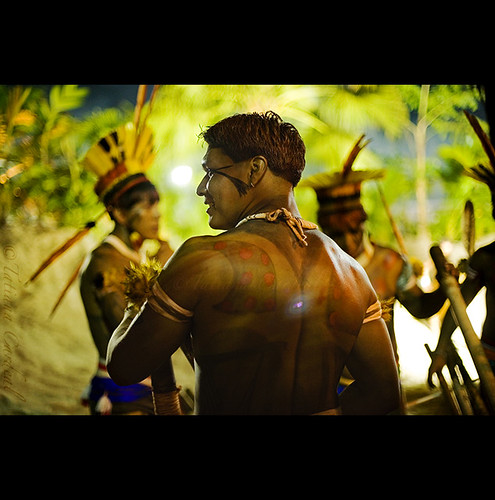
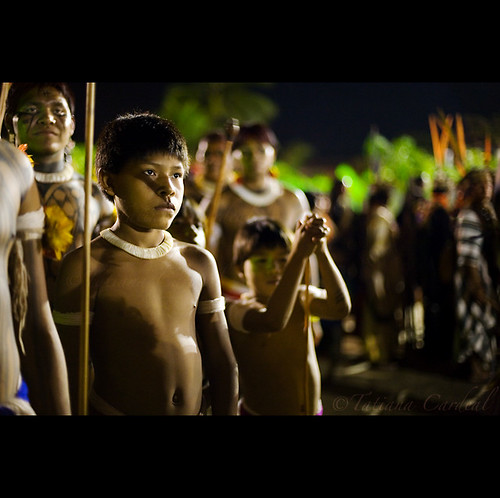
> Yawalapiti warriors live along the Xingu River, at the Xingu Park. I photographed them during the Indigenous National Festival.


While watching the bad day that people, photographers, journalists had in Cairo today, I was observing the arrogance of Muraback's govern and feeling shocked with all the violence. At the same time, I needed to write again about another trouble in another govern, that in a way, is also showing arrogance and total disrespect from it's people: Brazil and the way the Belo Monte Dam have been conduced.

A recent partial license grant given by an interim president of IBAMA (Brazilian Institute for Environment and Natural Renewable Resources), allowed the construction camps and site of the hydroelectric plant of Belo Monte in the Xingu River, at Para State - and has generated a series of reactions against the decision at the media. Federal prosecutors had recommended to IBAMA to not fragment the licensing to speed up the process because the requirements for the previous license had not been completed. A partial license (which should be part of a full license) does not exist in Brazilian environmental legislation.
Not enough, the Federal Public Ministry estimates the number of people affected to be about 40,000 - including traditional and indigenous populations!

Also a controversial fact was the departure of then President of IBAMA, Aberlardo Bayma, on January 12. Bayma justified the resignation saying that his decision was motivated by "personal reasons". However, rumors on the media tell that in recent meetings with Eletronorte, Bayma refused to grant the dam's final construction license, arguing that IBAMA could not grant the document since the project is full of environmental disputes.
Belo Monte's socio-environmental viability is also considered the reason for former Environmental Minister (and candidate in the 2010 presidential elections) Marina Silva stepping out of office in 2008.
Well, there are a lot of new information going on media and social media every day, showing many irregularities, economics doubts, and some institutional explanations. A quick research on the web will add much more to this issue.

Meanwhile, many organizations, social movements, indigenous people, activists, anthropologists, economists, journalists, environmentalists, judges... and many like me, have been alerting and questioning if this dam is really needed, and what are the real costs of this project (economic, human and environmental). The answer is still a mystery. Too many doubts to put so many and so much in risk.

Enough from today! With all I've seen, one thing must be said: Muraback won't be forgot by the history for his choices and acts. The same will happen with the Belo Monte Dam in Brazil.

Mobilizations and online petition
Amigos da Terra, Amazonia.org.br, Amazon Watch, AVAAZ.org, Greenpeace, Instituto Akatu, Instituto Sociambiental, International Conservation, International Rivers, Movimento Xingu Vivo Para Sempre, and other organizations, have been incisive on their position against the continuity of the project in the way it's being developed. Some of them started campaigns.

  • On Twitter, mostly of them are spreading the rashtag #parebelomonte and #belomontenao to protest and call attention for the issue. Some tweets are sharing petitions to be signed.
  • Avaaz launched a large petition, you can sign here.
    "President Dilma promised in her inauguration speech to develop Brazil without damaging the environment. But the Belo Monte dam would be the opposite -- a massive environmental scar in the heart of the Amazon."
  • Save the Xingu River says, and can be signed here.
    "It would divert the flow of the Xingu River and devastate an extensive area of the Brazilian rainforest, displace over 20,000 people and threaten the survival of indigenous peoples."
"Now is a crucial time to take action to defend the Xingu River."

Sources: Global Voices , Survival International , Instituto Sociambiental , Ministério Público Federal do Pará , Avaaz , Movimento Xingu Vivo Para Sempre , Miriam Leitão.com

2008/06/15

steps


Copyright © Tatiana Cardeal. All rights reserved.
Reprodução proibida. © Todos os direitos reservados.


"What is an adult?
A child blown up by age."
Simone de Beauvoir

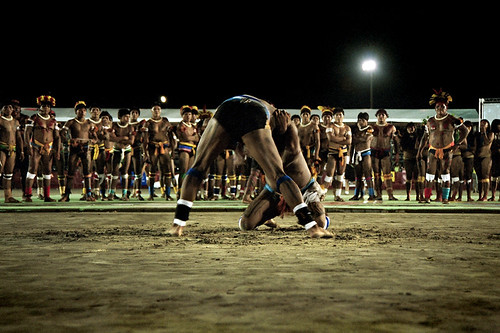
Boys and men,
future and warriors,
from Xingu, the beating Amazonia's heart,
during the Indigenous National Festival.

2008/05/26

the river flow


Copyright © Tatiana Cardeal. All rights reserved.
Reprodução proibida. © Todos os direitos reservados.


A man from Xingu dances
flowing with other groups,
during the Indigenous National Festival.
.
.
.

"What will be left of the Xingu river for the people of Xingu?
from Amazon Watch

Brazil's state dam company, Electronorte, is moving ahead with plans to build one of the Amazon's most controversial development projects - the Belo Monte dam on the Xingu River in the state of Pará. The Belo Monte dam replaces an old proposal for hydroelectric construction on the Xingu, abandoned over a decade ago in the face of massive international and national protest."

2008/05/18

the development


Copyright © Tatiana Cardeal. All rights reserved.
Reprodução proibida. © Todos os direitos reservados.


and social changes...
cameras and arrows.

About some things, I feel so lucky to be a testimony.
.
.

Finally, many Brazilian Indigenous People from different groups
are discovering the photography and having access.
Finally they will be able to be the
protagonists of their own history.

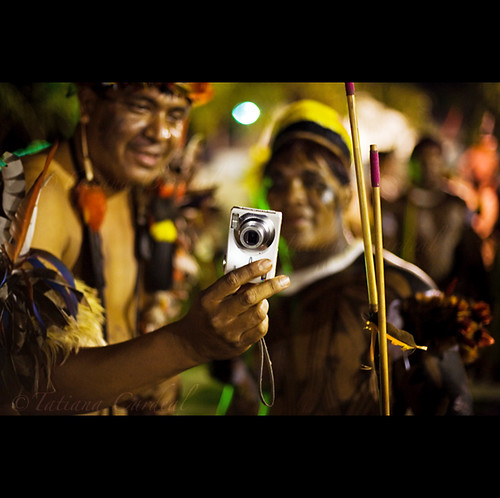
Here a Wapishana men shows their own picture to a Kuikuru man.
It's so clear why we all love development...

2008/03/24

protagonists of their own history


Copyright © Tatiana Cardeal. All rights reserved.
Reprodução proibida. © Todos os direitos reservados.


I took this portrait at the VII Indigenous Festival, 2007, where for the first time I was working beside a Kuikuro and a Xavante videomaker, a Karaja photographer and a Yudja sound recorder. Documenting the Festival since 2005, this was the first time that I've worked with a group of Indigenous People documenting their own Festival, and this certainly means a strong cultural change.
I usually show links (at the right column of this Blog) for other Natives Blogs and websites, and they have been increasing fast.

Soon, I hope they will be able to show to the world their own productions and finally their own vision of history, something that is really missed in Brazil. They will also be able to develop more structures to defend themselves and their autonomy.

Here goes some interesting information (sorry, it's my translation) from the USP website (University of Sao Paulo), wrote originally by Francisco Angelo, about the seminar that is starting tomorrow, the II Mídias Nativas (II Native Media), that will join Indigenous cultural producers, professors and media cultural producers from communities, living at the periphery and inequality of Sao Paulo:

"To create a site or blog showing his life or produce a short video and placed it on the web are now more than common practice for most young people of large Brazilian cities. But what we would say if it was done by bloggers and videomakers from indigenous communities of the Amazon or Canada? There are these processing experiments possible by new communication technologies that will be presented at the second edition of the Native Media, seminar which will be held in Sao Paulo between days 25 and March 27.

In the event, designed by the Research Center of Public Opinion in Contexts Digital (Cepop / Atopos) of the School of Communications and Arts (ECA) of USP, members of ethnic groups such as Guarani, Terena and Xavante will share their experiences media, which are the publication of books, production of radio programs within the villages and reach the digital production more explicit, such as CDs, Websites, Nets and blogs. Also will be present representatives of natives from Canada, where similar projects have been developed by the people Algonquines and Atikamekw.

"What is happening today is a revolution. It is the power of the press ", defines Massimo di Felice, a professor of ACE and one of the organizers of the meeting. For him, the new digital communication technologies represent an unprecedented experience for people before "invisible" as the locals: to be the protagonists of their own history. "For 500 in many years, the Indians in Brazil were the object of policies on the part of governments, FUNAI, NGOs. Today, with the help of the Internet, they have the opportunity to make direct diplomacy, without the intermediation of the organs and entities that tutelage. They even disclose their texts, their culture, and come in contact with international organizations, for example. "

Indigenous People and young population from the periphery
At the first Native Media, which occurred in 2006, several texts of indigenous authors then presented were gathered and published in Italy, in the form of the book Indiografia. This second edition of the event has broadened the issue of indigenous peoples also for the young people of the suburbs of large Brazilian cities, as Ronaldo Costa and Elieser Santos. They created the Canal do Motoboy, a virtual daily journal where motorcyclists write and publish photos generated by mobile phones on their day-to-day in the middle of the chaotic transit of Sao Paulo city.

For Di Felice, this is a clear signal that the role electronics that are changing indigenous people is a fact worldwide. "Today, any individual can produce their own content and make it available online for the whole world. This reverses the various models of communication classic which separated clearly an emitter, the 'owner' of the information, the receivers, "says Massimo.

Apart from the changes in culture communicative, Massimo also points to a qualitative change of citizenship. The web, he said, allows people who live in the same locality is aware, to organize themselves and, above all, create ways to act on the environment in which they live. "The digital culture is promoting an activism, with implications, I would say, for the explosive politics. People are going to have a relationship of direct action on its territory, without going through the traditional forms of authority. It is a production of a new form of citizenship, more collaborative and participatory, ".

2008/03/15

future


originally uploaded by Tatiana Cardeal.
Copyright © Tatiana Cardeal. All rights reserved.
Reprodução proibida. © Todos os direitos reservados.

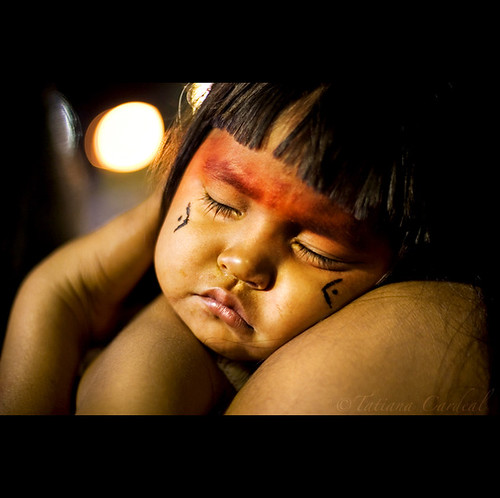
A Yawalapiti baby was dreaming during the ceremony...
I was dreaming with her future.


Pontos.de.Vista (Points.of.View) is a Portuguese website about photography showing collective exhibitions, individual portfolios and invited photographers, where I spend a lot of time looking through really nice photographers body work.
I was honored by their invite, as a guest author, to show some of my work there.
You can see it at this link: "Incendiary of Souls".

Many thanks to Sofia Quintas and Paulo Rodrigues (photographers and leaders of Ponto.de.Vista) for this opportunity, and specially to contribute with the memory of the Indigenous Peoples culture, that are constant living such a strong transformation in Brazil.

2005/04/25

lighting balance


originally uploaded by Tatiana Cardeal © 2005

As we need the differences between
male and female to produce life,
the cold would not exist without the warm,
and nature gave us both extremes: ice and fire.
Light would not exist without the dark.

That's what i was hearing on the symbolic ritual.
We may need the difference to create balance.
What do you hear?

constelations


originally uploaded by Tatiana Cardeal © 2005

In Kuikuros People's culture, some dreams and sickness could put humans in contact with the itsekes spirits (sobrenatural spirits living in the forests and in the water's bottoms), to reestablish the balance, the order, the health.But if you born a Xaman, you can be relate with the itsekes spirits naturally.

They are many ethnics groups living Indigenous Park of the Xingu ,
on Mato Grosso State, from Brazil. I met the Kuikuro and the Yawalapiti People.
Yawalapiti's population were about only 208 people,
and Kuikuros were about 394, in 1999.

time of creation


originally uploaded by Tatiana Cardeal © 2005

For the Kuikuro People from Xingu everything which exist
and deserve an explanation, is associate with one or more narratives.
The sun, Giti, is the cultural hero, the creator with their twin
brother Aulukuma, the moon. The time of creation was, and still is,the time where humans and not-humans were comunicating each other.

Xingu People


Xingu People, originally uploaded by Tatiana Cardeal.

Xingu's women painted legs


uploaded by Tatiana Cardeal © 2005

to walk our walk.

much more


originally uploaded by Tatiana Cardeal © 2005

Yes, he is exotic.
But i'll ask you to try looking at him as a
human being as you and me.
They asked me to show them like this.
They told they are tired by being looked as just
exotic "things" to be photographed.
I think they are right.

fight


originally uploaded by Tatiana Cardeal © 2005

It's all my nature do in the time,
even in inner silence.

youth


originally uploaded by Tatiana Cardeal © 2005

imagine


originally uploaded by Tatiana Cardeal © 2005

last witnesses


originally uploaded by Tatiana Cardeal © 2005

<> ... of some human possibilits to live really connected with nature.

body art


originally uploaded by Tatiana Cardeal © 2005