Showing posts with label social impact. Show all posts

2012/10/10

I support the Indigenous Cause


In Support the Indigenous Cause

Copyright © Tatiana Cardeal. All rights reserved.

Reprodução proibida. © Todos os direitos reservados.

The model of development that Brazil was rising in the last years could have some strong positive points, but some issues related with the environment, sustainability, violence and disrespect of the Indigenous and Traditional Communities rights (as the Quilombolas - historic afro-brazilian communities) are just going worst.

Last July and August I traveled about 4000km on the Brazilian east boarder, between Bahia' South state and the North of Espírito Santo, visiting many Indigenous and Afro-Brazilian communities (Quilombolas). I was shooting for a research that will be published soon. The main picture is really bad. I also met and interviewed anthropologists, professors at universities and researchers, and what I've seen is disappointment when not revolt.
A meeting formed by a large national group of anthropologists to write a collective manifest for the government was recent planned to happen in Florianópolis. I'll updated about.

You've probably heard about Belo Monte Dam and other projects in the Amazon area, troubles with deforestation, monoculture, and lands issues in the country. The Brazilian Association of Judges for Democracy (www.ajd.org.br) released a campaign named "I Support the Indigenous Cause" and are asking for signatures.

I support the Indigenous Cause
Against the PEC 215 (proposed constitutional amendment)
Demarcation of the Indigenous Lands
Urgency in Court Decisions

There are more detailed information rolling the bar on this link.
I Support the Indigenous Cause
Check the link for other languages:
Português / Español / Français / Italiano / English


If you agree, you can sign the petition that will be sent to the Supreme Court,
the President of the Republic, the Senate and the House of Representatives.

Please, share the campaign with your contacts.

________________________

Eu Apoio a Causa Indígena 

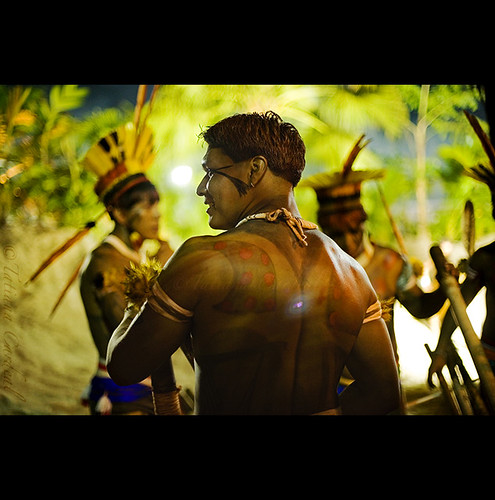
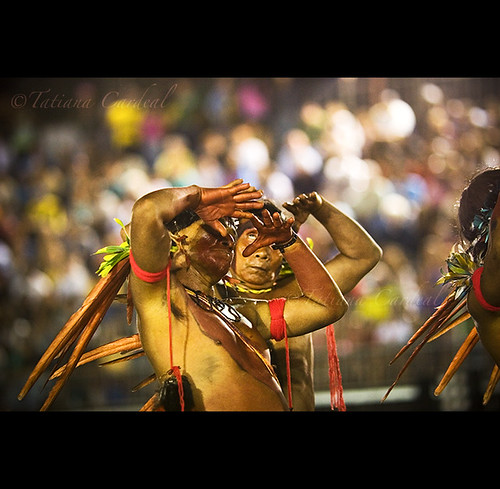
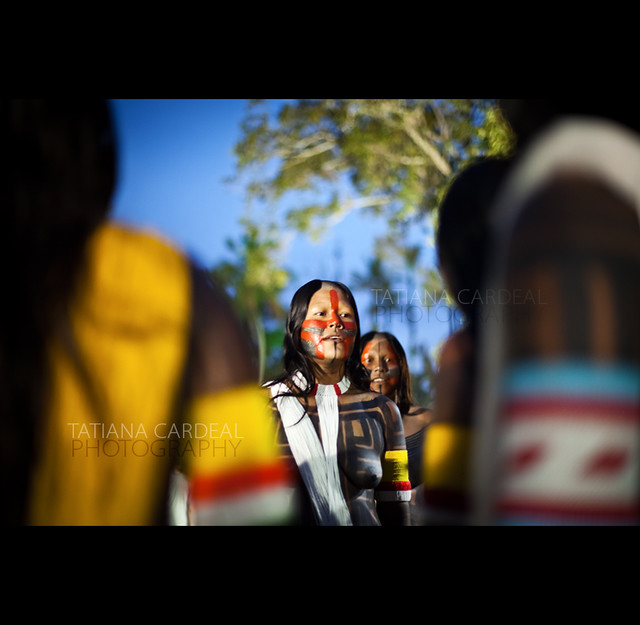
Photo: > Kayapó women were singing and dancing their traditions during the Indigenous National Festival, 2012. Bertioga, SP, Brazil.


2011/07/08

Temporal Beauty


This first semester I've been traveling much more than I expected: Argentina (twice), Iguazu Falls, New York City, Uruguay... so, apologies for the long absence here. Since my last post in February I did these trips, went back to Argentina shooting the Northwest area: Salta and Jujuy Provinces, Cataratas do Iguaçu in the Brazilian South, classic icons of South America. It was a new assignment for the Sunday Times Travel Magazine this year, an amazing road trip, and they has just published this Argentina feature named "Tango for Two". You can check it out in the lastest July issue.

These tear sheets above were featured a few months ago inside the NATURA Magazine, previously designed for the printed magazine, and launched for IPad (March/April, 2011). I'm not quite sure if it was publish exactly like I'm showing here (surprisedly, after hard trying to get a pdf from the essay, I still couldn't get from the publishers the final version. According them, due server troubles.)
But well, this was the approved layout, so, I believe (and expect) it should looks like that.

These photos are a piece of an essay I started to shoot years ago and had never finished. Some of you might remember those pictures displayed at my Flickr's page.
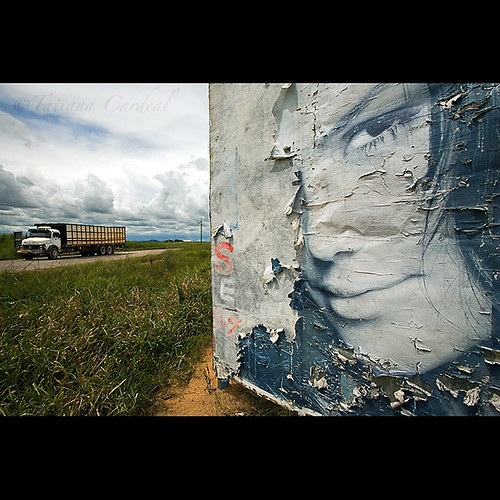
Images of women & advertisement have always called my attention, usually producing an avalanche of questionaries, thoughts and feelings. For me it's about time, patterns, sensuality, decadence, abandone, consume, pressure, scars. But these specific bilboards were shot in the Brazilian countryside, at the BR-163 and towns nearby the frontier of Mato Grosso and Pará States, while I was traveling for an NGO on a research/ reportage about sexual exploitation of children and teenagers on the roads.

Old bilboards whispered in my ears all the journey. I couldn't silence them.


2011/02/02

Back to the point: Belo Monte Dam

warrior's light
Copyright © Tatiana Cardeal. All rights reserved.
Reprodução proibida. © Todos os direitos reservados.


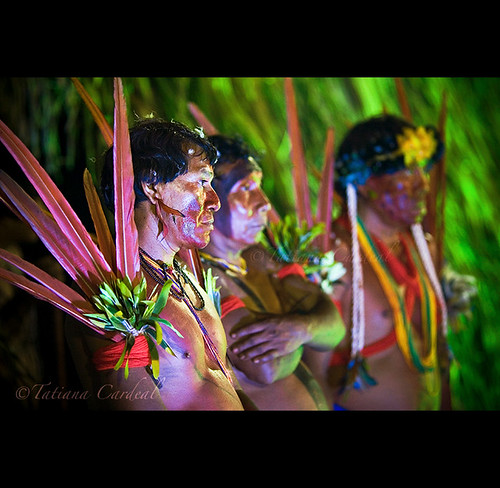
> Yawalapiti warriors live along the Xingu River, at the Xingu Park. I photographed them during the Indigenous National Festival.


While watching the bad day that people, photographers, journalists had in Cairo today, I was observing the arrogance of Muraback's govern and feeling shocked with all the violence. At the same time, I needed to write again about another trouble in another govern, that in a way, is also showing arrogance and total disrespect from it's people: Brazil and the way the Belo Monte Dam have been conduced.

A recent partial license grant given by an interim president of IBAMA (Brazilian Institute for Environment and Natural Renewable Resources), allowed the construction camps and site of the hydroelectric plant of Belo Monte in the Xingu River, at Para State - and has generated a series of reactions against the decision at the media. Federal prosecutors had recommended to IBAMA to not fragment the licensing to speed up the process because the requirements for the previous license had not been completed. A partial license (which should be part of a full license) does not exist in Brazilian environmental legislation.
Not enough, the Federal Public Ministry estimates the number of people affected to be about 40,000 - including traditional and indigenous populations!

Also a controversial fact was the departure of then President of IBAMA, Aberlardo Bayma, on January 12. Bayma justified the resignation saying that his decision was motivated by "personal reasons". However, rumors on the media tell that in recent meetings with Eletronorte, Bayma refused to grant the dam's final construction license, arguing that IBAMA could not grant the document since the project is full of environmental disputes.
Belo Monte's socio-environmental viability is also considered the reason for former Environmental Minister (and candidate in the 2010 presidential elections) Marina Silva stepping out of office in 2008.
Well, there are a lot of new information going on media and social media every day, showing many irregularities, economics doubts, and some institutional explanations. A quick research on the web will add much more to this issue.

Meanwhile, many organizations, social movements, indigenous people, activists, anthropologists, economists, journalists, environmentalists, judges... and many like me, have been alerting and questioning if this dam is really needed, and what are the real costs of this project (economic, human and environmental). The answer is still a mystery. Too many doubts to put so many and so much in risk.

Enough from today! With all I've seen, one thing must be said: Muraback won't be forgot by the history for his choices and acts. The same will happen with the Belo Monte Dam in Brazil.

Mobilizations and online petition
Amigos da Terra, Amazonia.org.br, Amazon Watch, AVAAZ.org, Greenpeace, Instituto Akatu, Instituto Sociambiental, International Conservation, International Rivers, Movimento Xingu Vivo Para Sempre, and other organizations, have been incisive on their position against the continuity of the project in the way it's being developed. Some of them started campaigns.

  • On Twitter, mostly of them are spreading the rashtag #parebelomonte and #belomontenao to protest and call attention for the issue. Some tweets are sharing petitions to be signed.
  • Avaaz launched a large petition, you can sign here.
    "President Dilma promised in her inauguration speech to develop Brazil without damaging the environment. But the Belo Monte dam would be the opposite -- a massive environmental scar in the heart of the Amazon."
  • Save the Xingu River says, and can be signed here.
    "It would divert the flow of the Xingu River and devastate an extensive area of the Brazilian rainforest, displace over 20,000 people and threaten the survival of indigenous peoples."
"Now is a crucial time to take action to defend the Xingu River."

Sources: Global Voices , Survival International , Instituto Sociambiental , Ministério Público Federal do Pará , Avaaz , Movimento Xingu Vivo Para Sempre , Miriam Leitão.com

2010/10/17

Out My Window - interative 360º documentary!


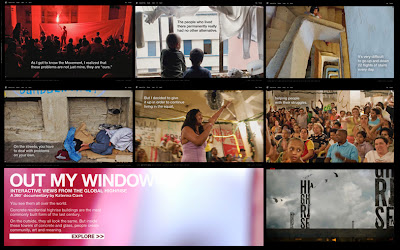
Out My Window is the first major global of HIGHRISE super cool multi-media collaborative documentary experiment at the National Film Board of Canada, directed by Katerina Cizek.
And I'm in!

Highrise is a project about the human experience in vertical suburbs, "exploring the state of our urban planet told by people who look out on the world from highrise windows... residents who harness the human spirit — and the power of the community...". These concepts approximated one of their editors, Heather Frise, to my documentary work at Prestes Maia Occupation (at São Paulo, Brazil), that was showed at this blog (and Flickr).

I contributed with some of my Archival Photos, images I took at the occupation during 2005 to 2007, that are showed on the "Neighbours" and "Highrise Squat", both pieces of Ivaneti's story. Sadly, I was just arriving in China (2009) when they first contacted me asking to make the records and new photos for Ivaneti's story, but couldn't follow them. Another photographer in São Paulo, Julio Bittencourt, that also worked at the P. Maia Occupation and knew the people did it, and his images looks so great!

The project worth a visit! Check it here.
Loved!


2010/08/02

yanomami ritual

yanomami ritual, Brazil
Copyright © Tatiana Cardeal. All rights reserved.
Reprodução proibida. © Todos os direitos reservados.


For the Yanomami, urihi, the forest-land, is not a mere inert space for economic exploration (of what we call 'nature'). It is a living entity, part of a complex cosmological dynamic of exchanges between humans and non-humans. As such, it today finds itself threatened by the reckless predation of whites. In the view of their leader:
"The forest-land will only die if it is destroyed by whites. Then, the creeks will disappear, the land will crumble, the trees will dry and the stones of the mountains will shatter under the heat. The xapiripë spirits who live in the mountain ranges and play in the forest will eventually flee. Their fathers, the shamans, will not be able to summon them to protect us. The forest-land will become dry and empty. The shamans will no longer be able to deter the smoke-epidemics and the malefic beings who make us ill. And so everyone will die."

Davi Kopenawa Yanomami
Information by: ISA
>> photo of Yanomami shamans at the Indigenous National Festival, Bertioga, Brazil.

Please sign the letter to the Brazilian Senate and help.
They still need many signatures:
Rainforest Foundation / petition

_________

Saiba mais e participe assinando no link abaixo:
Instituto Socioambiental: Saúde Indígena

2010/07/29

yanomami alert


Copyright © Tatiana Cardeal. All rights reserved.
Reprodução proibida. © Todos os direitos reservados.


"Healthcare programs for indigenous peoples in Brazil are overseen by a federal agency, called FUNASA, under the Ministry of Health. In Northern Brazil, the Yanomami have denounced an alarming increase in malaria cases, exacerbated by illegal gold mining. Currently, medical assistance is not getting to the communities because of bureaucratic hurdles around the approval of airstrips in the Yanomami Area – something that has never been a problem either there or elsewhere. Indeed, many of the scandals involving FUNASA have taken place within the Yanomami health program. In the Javari Valley, a vast indigenous area in the western Amazon, hepatitis and malaria epidemics are ravaging the Kanamari, Matis, Marubo Tsohom-dyapa, and Korubo, as well as isolated groups that live in the region. "

For these and other reasons, indigenous organizations, organizations on human rights, racial equality and policies for women are mobilizing for what the Senate does not change the Bill of Conversion and vote before the 4th of August, when expiry of the term MP 483.
We hope that through a new, independent government office, indigenous healthcare will receive the attention it deserves.

Please sign the letter to the Brazilian Senate
Learn more and participate by sending the signing the petition at the link!
We need a lot of signatures and we have only four days.
Thank you!

http://www.change.org/rainforest_foundation/petitions/view/indigenous_healthcare_under_threat_in_brazil

>> photo of Yanomami people at the Indigenous National Festival, Bertioga, Brazil.

2010/05/23

Chinese memories

playing erhu
Copyright © Tatiana Cardeal. All rights reserved.
Reprodução proibida. © Todos os direitos reservados.


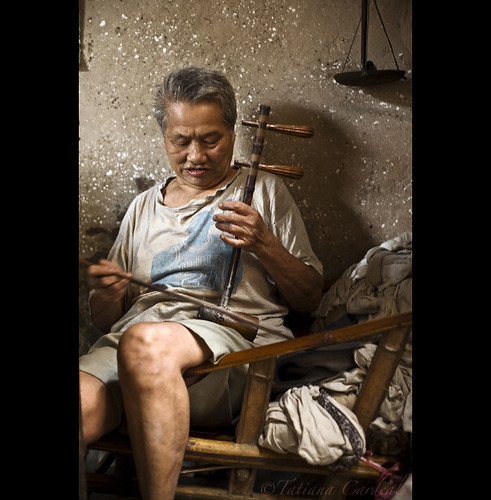
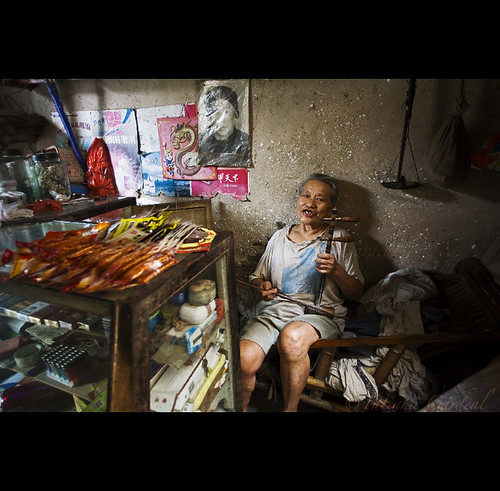
Walking at Fuli Ancient town alleys, I heard a music coming from an open door.
It was a small shop at a home, selling lighters, soap, cigarettes, candies... little things of everyday life of the village.
I though it was a radio playing an old Chinese song. Curious, slowly, put my head inside. I discovered that the beautiful song was coming from the her, the owner.

No spoken words, but a body language talk, the lady allowed to shot her portraits while I was fascinated with the magic sound of her handmade erhu, the scenery, it's particular smell, and well... her Chicago Bulls, Michael Jordan's 23 t-shirt.
Relaxed, concentrated on the music, almost ignoring my presence, she didn't stop a second.
It was impossible not start wondering about how the fast Chinese development will affect these people, the town, their culture.


The Erhu
The story tells that during the decades of 30 and 40 of the last century, at the Chinese city of Wuxi, a blind street musician was always seen playing an instrument with two strings and begging on the streets. Passers-by delighted with those tunes, stopped to listen.

The artist began to be known as "the Blind ABing". The instrument he played was the famous Erhu, also known as Chinese violin. Even today, whenever people talk about the erhu, they also speak of the Blind Abing, the two are inseparable in the minds of many Chinese.


the singer owner

back in the time
Copyright © Tatiana Cardeal. All rights reserved.
Reprodução proibida. © Todos os direitos reservados.


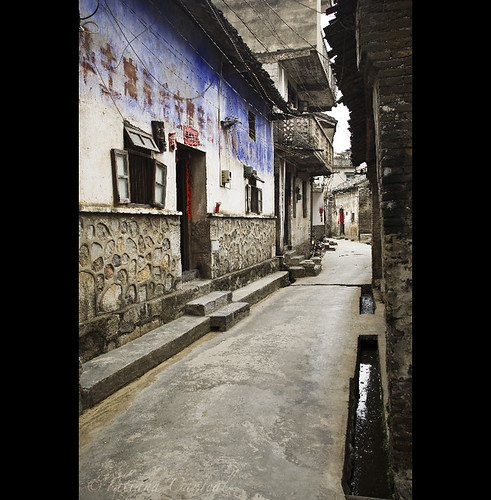
Fuli is a Ming Dynasty town built on the Li River's northern banks.
The village has a history of 800 years, narrow, winding cobblestone streets and ancient temples.


> Alley at Fuli Ancient Town, Guangxi Zhuang Autonomous Region, China.


2009/06/12

mourning chant to Peru


Copyright © Tatiana Cardeal. All rights reserved.
Reprodução proibida. © Todos os direitos reservados.

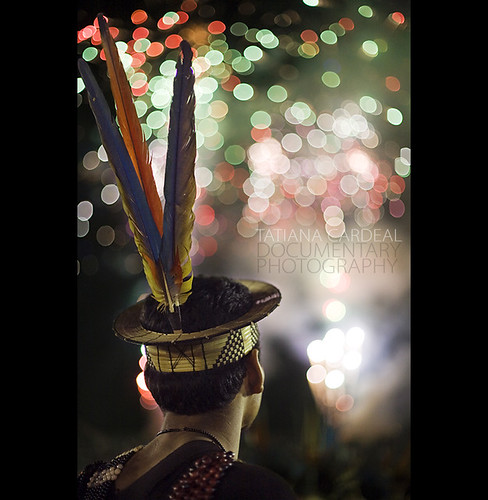
Image: Ashaninka man watching fireworks at the Indigenous National Party, at Bertioga.

A week ago (June, 5), many people have died in clashes in Peru between the security forces and indigenous people in the Amazon region. Those killed included tribesmen and policemen. The violence took place as security forces tried to end a road blockade, a highway near the town of Bagua.
Peru is witnessing violent clashes between indigenous groups desperately trying to protect the Amazon and the government, who has pushed through legislation allowing intensive mining, logging and large scale farming in the rainforest.
If government and extractive industries have their way, the Peruvian rainforest and its people will suffer massive devastation.

More info about , here:
Laws criticized by Peru's indigenous groups

Sign the urgent petition below (from AVAAZ.org)
and support the courageous struggle of the indigenous peoples to protect the Amazon — a prominent and well respected Latin American politician will deliver it to President Alan Garcia on our behalf.

English: Protect Indigenous Rights - Save the Amazon

Português: Proteja os direitos indígenas e a Amazônia

Espanol: ¡Por los derechos indígenas y la Amazonia!

Also available in other languages, please check the links.

2009/04/26

burn it blue


out of water

Copyright © Tatiana Cardeal. All rights reserved.
Reprodução proibida. © Todos os direitos reservados.


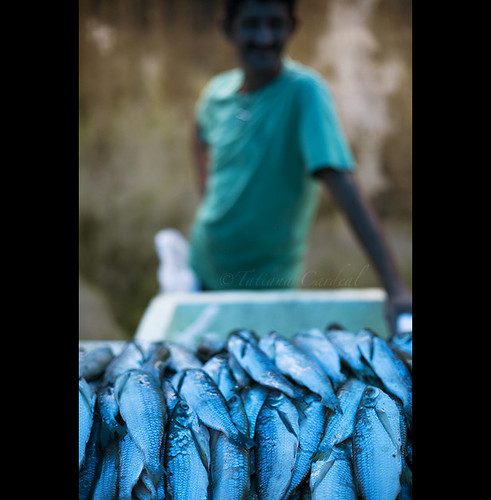
Free market, at São Gabriel da Cachoeira, Amazonas.

The Negro River doesn't have a generous offer of fishes, and the people living at São Gabriel, almost 1000 km far from Manaus, still receive a lot of needs from this city. A long journey by boat that takes 4 to 7 days.

In the free market is possible to find a few fresh things, like fish, flour, cassava, some local fruits... but food can be a hard thing. In this city where mostly of the population (99%) are indigenous people, they've been serious afraid about climate changes. The river was too high to start working on the plantations, the fish are poor, and a single can of milk costs at least $5 dollars, when you can find it.

2008/12/19

the cycle


Copyright © Tatiana Cardeal. All rights reserved.
Reprodução proibida. © Todos os direitos reservados.


Many mothers and grandparents of young people who were sexually exploited share a history in common: rear children and grandchildren who never knew their own father.
At BR-163, several cities were born of goldmines and activities that attracted outsiders, temporary workers with no local ties. It is a cycle that repeats itself.

Young girls become pregnant from men that never return. The children are reared without a family structure, and are often abandoned with grandparents or sold to networks operating in other states or countries.

Many of the children sexually exploited in the region are sons and daughters of this vicious cycle.

Check out my website, the BR-163 Highway's gallerie, for more images and information.

2008/12/18

young victim


Copyright © Tatiana Cardeal. All rights reserved.
Reprodução proibida. © Todos os direitos reservados.

At BR-163, the young girl was hesitant to report how, as to the age of 15, after being sexually exploited by a year, she managed to escape by the back window from a brothel, with 8 months pregnant, rescued by her own mother.

Gender and race are themselves aspects structuring the logic of the market for sex.
Projects already implemented show that the vast majority of victims of sexual exploitation, tourism and trafficking are the female, black, mulatto and mestizo.

A former authoritarian and sexist culture still existing in the Brazilian society creates inequality in the relationship between gender and promotes an image of women as mere sexual object, subject to be purchased or used. The crystallization of this strengthen the concept of a female body offered as a supply, something natural - for both adults as for children and adolescents.

2008/11/18

consuME


5a. scars 5b. scars 5c. scars
5d. scars 5e. scars
Copyright © Tatiana Cardeal. All rights reserved.
Reprodução proibida. © Todos os direitos reservados.


During a research about the sexual commercial exploitation of children and adolescents on Brazilian roadways , this set of images was born as a perpendicular set from my documentation of the issue.
Those images, old billboards around the BR-163 Highway, were always calling me, sending me subtle messages, like whispers that I couldn't silence.

According the Brazilian ANDI's documents (Childhood and Adolescence Rights News Agency Network), the consumerist pressure exerted by the media, mainly by the advertising industry, impose patterns of consumer behavior often inaccessible to a large population, and especially the children and youth. The search for such patterns represent in many cases one of the factors for approval among children and adolescents and networks of sexual exploitation.

2008/11/07

voiceless


Copyright © Tatiana Cardeal. All rights reserved.
Reprodução proibida. © Todos os direitos reservados.

Many rural households are affected by the sexual exploitation of children and adolescents on the Brazilian roads. Most times, they are sons and daughters of peasants who migrate from rural areas, and end up being exploited on the highways.

It is a portion of the population socially vulnerable, voiceless and without access to basic rights of citizenship. At the root of the problem are poverty and social exclusion: unemployment, malnutrition and hunger, the destruction of the family, the poorly educated family, and children and teenagers out of school.

The networks that take advantage of activity, linked to pornography, sex tourism and child sexual exploitation, is usually organized within the country, in cities with 5 thousand and 100 thousand inhabitants.

2008/11/03

vulnerability


Copyright © Tatiana Cardeal. All rights reserved.
Reprodução proibida. © Todos os direitos reservados.


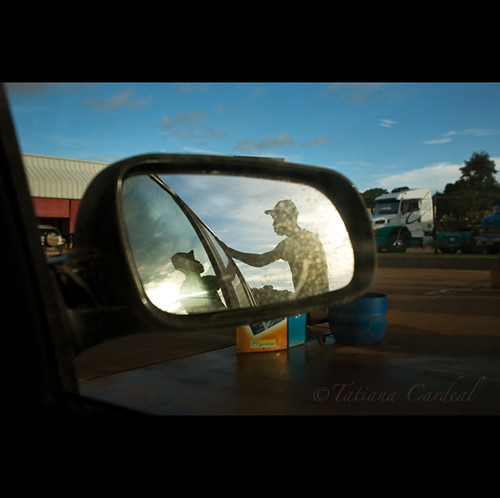
The service stations are the most vulnerable sites to sexual exploitation of children and adolescents on Brazilian roadways.

The conditions of the offered services at these places reflect the very bad situation of the drive truckers, and also a silent complicity in relation to sexual exploitation.

Indirectly, the owners of service stations benefit it as a source of income for their business.

2008/10/28

clients


Copyright © Tatiana Cardeal. All rights reserved.
Reprodução proibida. © Todos os direitos reservados.


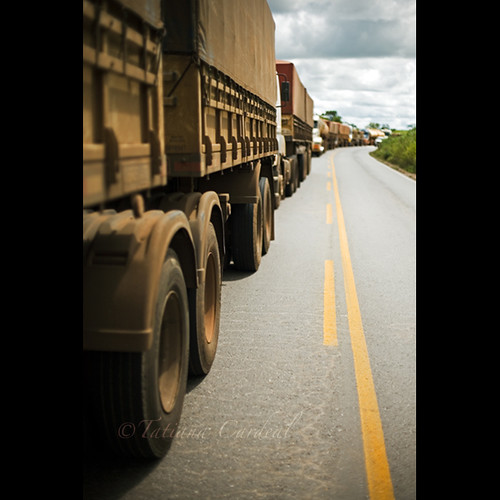
Drive truckers are the most frequently clients of the children and teenagers living
in sexual commercial exploitation situation at the Brazilian roads.
Responsible for transporting more than 60% of all freight moved in the country, these professionals spend most of their life in the driver's seat of the truck.

According a large national research developed by Childhood - Brasil with the Federal University of Rio Grande do Sul, drive-truckers consider themselves marginalized, eat and sleep poorly and stop at places with lack of infrastructure.
More than a third of them admitted having participated directly in a situation of sexual exploitation of child or adolescent, often with no clear idea of what this means.

Check out my website, the BR-163 Highway's gallerie, for more images and information.

2008/10/20

rainbows and shadows


Copyright © Tatiana Cardeal. All rights reserved.
Reprodução proibida. © Todos os direitos reservados.

BR-163 Highway is one of the main roads cutting the heart of the Amazon.

BR-163, which is slated to be paved as an export corridor for soybeans via the Amazon River, traverses an area that is largely outside of Brazilian government control.
A climate of generalized lawlessness and impunity prevails, and matters related to environment and to land tenure are especially unregulated.

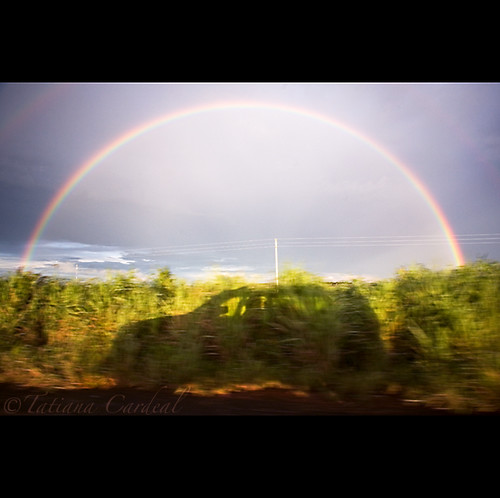
Rainbows and shadows were guiding my way during the travel on this emblematic highway.

Check out my website, the BR-163 Highway's gallerie, for more images and information.