Showing posts with label Indigenous National Festival. Show all posts

2012/10/10

I support the Indigenous Cause


In Support the Indigenous Cause

Copyright © Tatiana Cardeal. All rights reserved.

Reprodução proibida. © Todos os direitos reservados.

The model of development that Brazil was rising in the last years could have some strong positive points, but some issues related with the environment, sustainability, violence and disrespect of the Indigenous and Traditional Communities rights (as the Quilombolas - historic afro-brazilian communities) are just going worst.

Last July and August I traveled about 4000km on the Brazilian east boarder, between Bahia' South state and the North of Espírito Santo, visiting many Indigenous and Afro-Brazilian communities (Quilombolas). I was shooting for a research that will be published soon. The main picture is really bad. I also met and interviewed anthropologists, professors at universities and researchers, and what I've seen is disappointment when not revolt.
A meeting formed by a large national group of anthropologists to write a collective manifest for the government was recent planned to happen in Florianópolis. I'll updated about.

You've probably heard about Belo Monte Dam and other projects in the Amazon area, troubles with deforestation, monoculture, and lands issues in the country. The Brazilian Association of Judges for Democracy (www.ajd.org.br) released a campaign named "I Support the Indigenous Cause" and are asking for signatures.

I support the Indigenous Cause
Against the PEC 215 (proposed constitutional amendment)
Demarcation of the Indigenous Lands
Urgency in Court Decisions

There are more detailed information rolling the bar on this link.
I Support the Indigenous Cause
Check the link for other languages:
Português / Español / Français / Italiano / English


If you agree, you can sign the petition that will be sent to the Supreme Court,
the President of the Republic, the Senate and the House of Representatives.

Please, share the campaign with your contacts.

________________________

Eu Apoio a Causa Indígena 

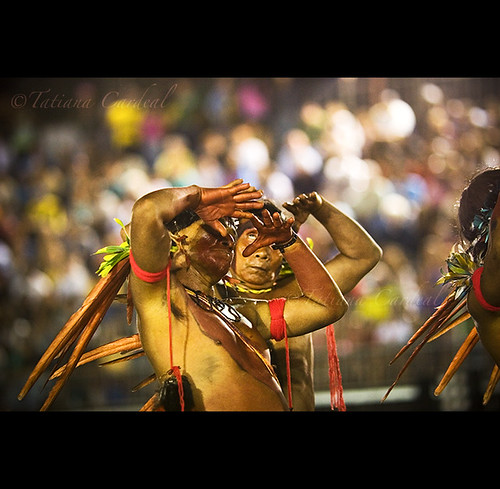
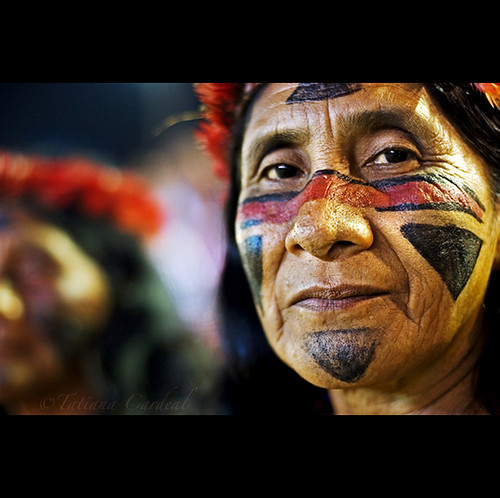
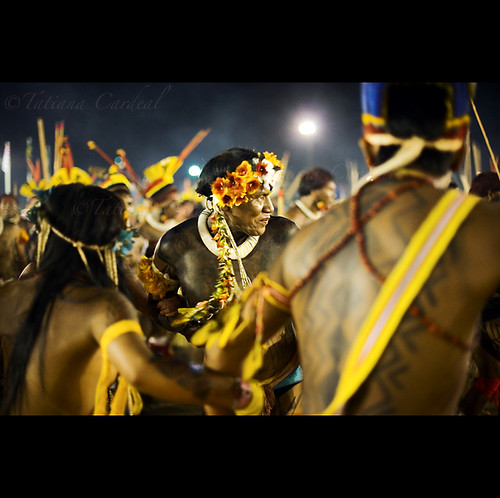
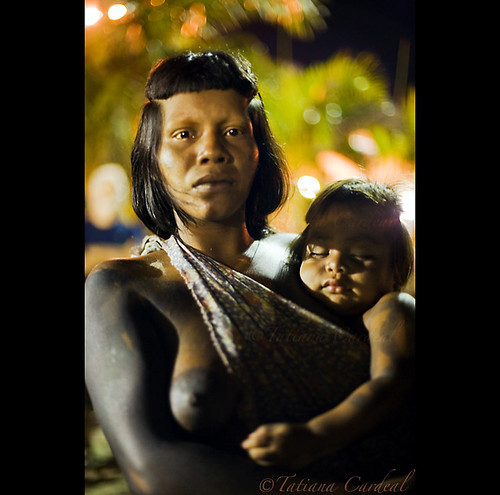
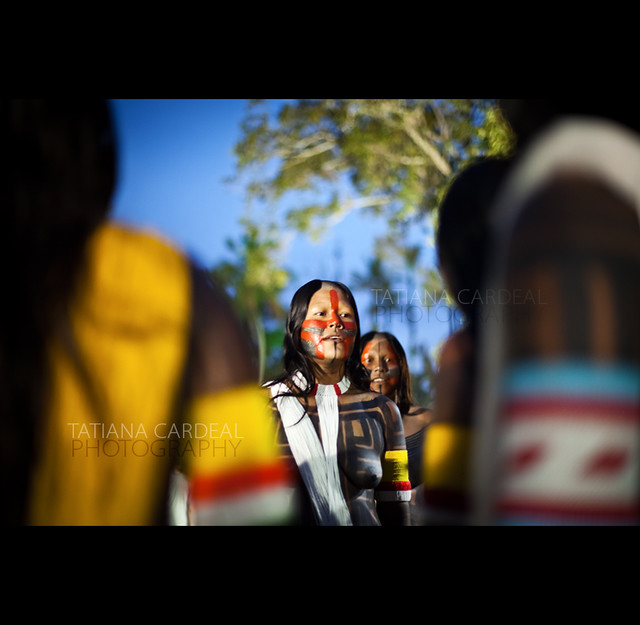
Photo: > Kayapó women were singing and dancing their traditions during the Indigenous National Festival, 2012. Bertioga, SP, Brazil.

2011/02/02

Back to the point: Belo Monte Dam

warrior's light
Copyright © Tatiana Cardeal. All rights reserved.
Reprodução proibida. © Todos os direitos reservados.


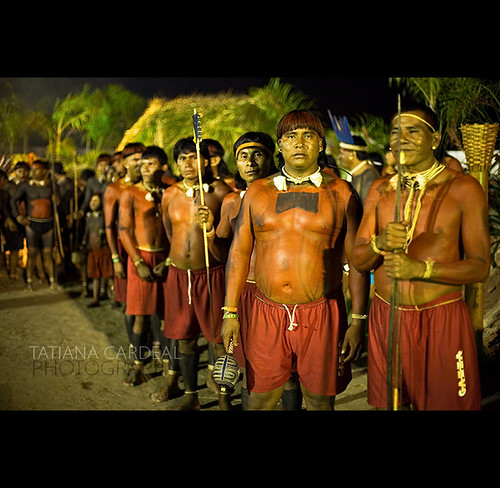
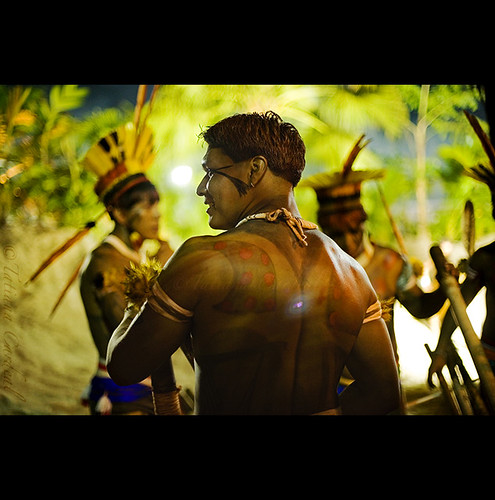
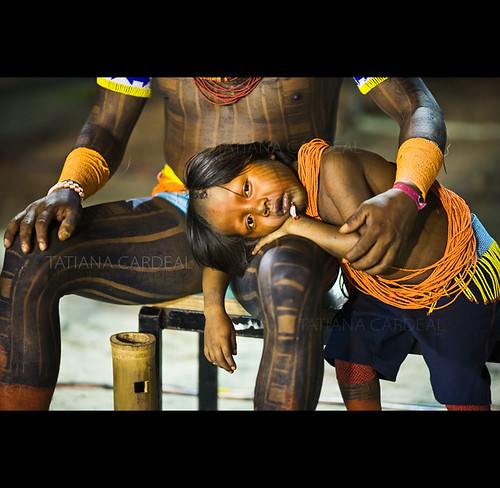
> Yawalapiti warriors live along the Xingu River, at the Xingu Park. I photographed them during the Indigenous National Festival.


While watching the bad day that people, photographers, journalists had in Cairo today, I was observing the arrogance of Muraback's govern and feeling shocked with all the violence. At the same time, I needed to write again about another trouble in another govern, that in a way, is also showing arrogance and total disrespect from it's people: Brazil and the way the Belo Monte Dam have been conduced.

A recent partial license grant given by an interim president of IBAMA (Brazilian Institute for Environment and Natural Renewable Resources), allowed the construction camps and site of the hydroelectric plant of Belo Monte in the Xingu River, at Para State - and has generated a series of reactions against the decision at the media. Federal prosecutors had recommended to IBAMA to not fragment the licensing to speed up the process because the requirements for the previous license had not been completed. A partial license (which should be part of a full license) does not exist in Brazilian environmental legislation.
Not enough, the Federal Public Ministry estimates the number of people affected to be about 40,000 - including traditional and indigenous populations!

Also a controversial fact was the departure of then President of IBAMA, Aberlardo Bayma, on January 12. Bayma justified the resignation saying that his decision was motivated by "personal reasons". However, rumors on the media tell that in recent meetings with Eletronorte, Bayma refused to grant the dam's final construction license, arguing that IBAMA could not grant the document since the project is full of environmental disputes.
Belo Monte's socio-environmental viability is also considered the reason for former Environmental Minister (and candidate in the 2010 presidential elections) Marina Silva stepping out of office in 2008.
Well, there are a lot of new information going on media and social media every day, showing many irregularities, economics doubts, and some institutional explanations. A quick research on the web will add much more to this issue.

Meanwhile, many organizations, social movements, indigenous people, activists, anthropologists, economists, journalists, environmentalists, judges... and many like me, have been alerting and questioning if this dam is really needed, and what are the real costs of this project (economic, human and environmental). The answer is still a mystery. Too many doubts to put so many and so much in risk.

Enough from today! With all I've seen, one thing must be said: Muraback won't be forgot by the history for his choices and acts. The same will happen with the Belo Monte Dam in Brazil.

Mobilizations and online petition
Amigos da Terra, Amazonia.org.br, Amazon Watch, AVAAZ.org, Greenpeace, Instituto Akatu, Instituto Sociambiental, International Conservation, International Rivers, Movimento Xingu Vivo Para Sempre, and other organizations, have been incisive on their position against the continuity of the project in the way it's being developed. Some of them started campaigns.

  • On Twitter, mostly of them are spreading the rashtag #parebelomonte and #belomontenao to protest and call attention for the issue. Some tweets are sharing petitions to be signed.
  • Avaaz launched a large petition, you can sign here.
    "President Dilma promised in her inauguration speech to develop Brazil without damaging the environment. But the Belo Monte dam would be the opposite -- a massive environmental scar in the heart of the Amazon."
  • Save the Xingu River says, and can be signed here.
    "It would divert the flow of the Xingu River and devastate an extensive area of the Brazilian rainforest, displace over 20,000 people and threaten the survival of indigenous peoples."
"Now is a crucial time to take action to defend the Xingu River."

Sources: Global Voices , Survival International , Instituto Sociambiental , Ministério Público Federal do Pará , Avaaz , Movimento Xingu Vivo Para Sempre , Miriam Leitão.com

2010/10/28

do we have a future?

do we have a future?
Copyright © Tatiana Cardeal. All rights reserved.
Reprodução proibida. © Todos os direitos reservados.


In the middle of so many debates about our presidential elections, sustainable development, social responsibility...
what would be the real future for Xingu People of Brazil?

Tuesday, October 26, the Movimento Xingu Vivo para Sempre (Movement Xingu Alive Forever), a coalition of over 250 organizations and social movements that oppose the construction of Belo Monte dam, sent to Dilma Rousseff and Jose Serra a letter requesting that they expose their projects about the controversial dam. It's time to hear answers from these candidates. We can strengthen the process, and let them know that the world is watching signing this:
Petition (english)
Abaixo-assinado (português)

You can also visit the Movement site here and support the cause at their social networks:
Movimento Xingu Vivo para Sempre

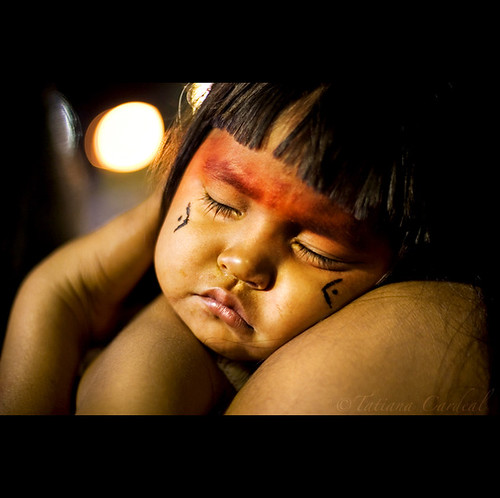
> Exhausted, a Kayapo child, during the Indigenous National Festival.

2010/08/09

International Day of the World's Indigenous Peoples


Copyright © Tatiana Cardeal. All rights reserved.
Reprodução proibida. © Todos os direitos reservados.

Take a moment to participate in the International Day of the World's Indigenous Peoples.
Send a letter to the White House in support of the United States endorsement of the UN Declaration on the Rights of Indigenous Peoples.
See this link from the Indian Law Resource Center.

Endorse the UN Declaration on the Rights of Indigenous Peoples

> photo: Xavante People, at the Indigenous National Festival.

2010/08/07

Shawãdawa

Copyright © Tatiana Cardeal. All rights reserved.
Reprodução proibida. © Todos os direitos reservados.


A Shawãdawa men, also knowed as Arara do Acre, was happy at the Indigenous Meeting.

I'm also happy to tell you that after many letters that you sent this week, it finally happened the approval of the Draft Law on Conversion (PLV) 08/2010, at the Brazilian Federal Senate.
After the vote, the Indians moved, gathered at the entrance of the Congress and celebrated the victory, after almost two years of intense mobilization of indigenous leaders and organizations, calling for the end of the participation of Funasa.

With nearly 300 years of delay, the Senate approves creation of the Special Secretariat of Indigenous Health.
A historical neglect should start to be repaired.


2010/08/02

yanomami ritual

yanomami ritual, Brazil
Copyright © Tatiana Cardeal. All rights reserved.
Reprodução proibida. © Todos os direitos reservados.


For the Yanomami, urihi, the forest-land, is not a mere inert space for economic exploration (of what we call 'nature'). It is a living entity, part of a complex cosmological dynamic of exchanges between humans and non-humans. As such, it today finds itself threatened by the reckless predation of whites. In the view of their leader:
"The forest-land will only die if it is destroyed by whites. Then, the creeks will disappear, the land will crumble, the trees will dry and the stones of the mountains will shatter under the heat. The xapiripë spirits who live in the mountain ranges and play in the forest will eventually flee. Their fathers, the shamans, will not be able to summon them to protect us. The forest-land will become dry and empty. The shamans will no longer be able to deter the smoke-epidemics and the malefic beings who make us ill. And so everyone will die."

Davi Kopenawa Yanomami
Information by: ISA
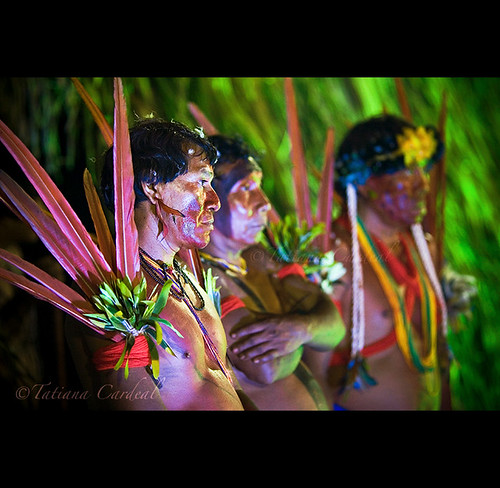
>> photo of Yanomami shamans at the Indigenous National Festival, Bertioga, Brazil.

Please sign the letter to the Brazilian Senate and help.
They still need many signatures:
Rainforest Foundation / petition

_________

Saiba mais e participe assinando no link abaixo:
Instituto Socioambiental: Saúde Indígena

2010/07/29

yanomami alert


Copyright © Tatiana Cardeal. All rights reserved.
Reprodução proibida. © Todos os direitos reservados.


"Healthcare programs for indigenous peoples in Brazil are overseen by a federal agency, called FUNASA, under the Ministry of Health. In Northern Brazil, the Yanomami have denounced an alarming increase in malaria cases, exacerbated by illegal gold mining. Currently, medical assistance is not getting to the communities because of bureaucratic hurdles around the approval of airstrips in the Yanomami Area – something that has never been a problem either there or elsewhere. Indeed, many of the scandals involving FUNASA have taken place within the Yanomami health program. In the Javari Valley, a vast indigenous area in the western Amazon, hepatitis and malaria epidemics are ravaging the Kanamari, Matis, Marubo Tsohom-dyapa, and Korubo, as well as isolated groups that live in the region. "

For these and other reasons, indigenous organizations, organizations on human rights, racial equality and policies for women are mobilizing for what the Senate does not change the Bill of Conversion and vote before the 4th of August, when expiry of the term MP 483.
We hope that through a new, independent government office, indigenous healthcare will receive the attention it deserves.

Please sign the letter to the Brazilian Senate
Learn more and participate by sending the signing the petition at the link!
We need a lot of signatures and we have only four days.
Thank you!

http://www.change.org/rainforest_foundation/petitions/view/indigenous_healthcare_under_threat_in_brazil

>> photo of Yanomami people at the Indigenous National Festival, Bertioga, Brazil.

2009/12/18

Humanity Photo Awards 2009


night sun future a jaguar scaring me the jaguar dance
let me be the river flow Guarani pipe's spirit
Copyright © Tatiana Cardeal. All rights reserved.
Reprodução proibida. © Todos os direitos reservados.


September, 2009 |

I was invited to come to Guangzhou - China, to attend the prize giving ceremony
award
at The Humanity Photo Awards (HPA), and it's opening exhibition.
The Award is
Organized by The China Folklore Photographic Association (CFPA),
The United Nations Educational, Scientific and Cultural Organization (UNESCO),
and The Guangzhou Asian Games Organizing Committee (GAGOC),

I'm a Documentary Award Winners for Portraits and Costumes series, with the entitled
Brazilian Nations
, part of a larger documentation of the
Indigenous Festival that
I've been working since 2005.

The award prize sent me to Asia, and for a week winners of HPA 2009 from
around the world come and gather in Guangzhou
city, sharing the meeting.


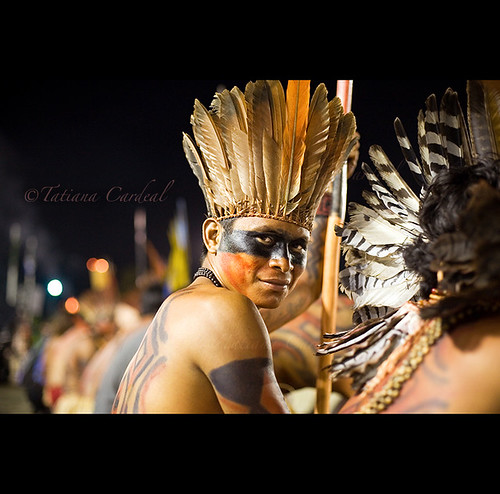
> Main image: from the Indigenous Festival at Bertioga town,
an Asurini woman that lives in Pará State from Brazil.

2009/06/12

mourning chant to Peru


Copyright © Tatiana Cardeal. All rights reserved.
Reprodução proibida. © Todos os direitos reservados.

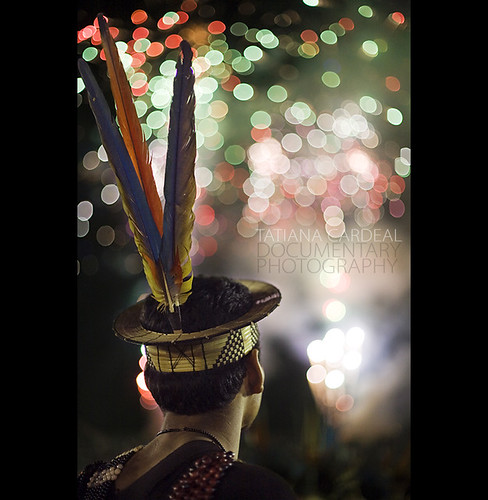
Image: Ashaninka man watching fireworks at the Indigenous National Party, at Bertioga.

A week ago (June, 5), many people have died in clashes in Peru between the security forces and indigenous people in the Amazon region. Those killed included tribesmen and policemen. The violence took place as security forces tried to end a road blockade, a highway near the town of Bagua.
Peru is witnessing violent clashes between indigenous groups desperately trying to protect the Amazon and the government, who has pushed through legislation allowing intensive mining, logging and large scale farming in the rainforest.
If government and extractive industries have their way, the Peruvian rainforest and its people will suffer massive devastation.

More info about , here:
Laws criticized by Peru's indigenous groups

Sign the urgent petition below (from AVAAZ.org)
and support the courageous struggle of the indigenous peoples to protect the Amazon — a prominent and well respected Latin American politician will deliver it to President Alan Garcia on our behalf.

English: Protect Indigenous Rights - Save the Amazon

Português: Proteja os direitos indígenas e a Amazônia

Espanol: ¡Por los derechos indígenas y la Amazonia!

Also available in other languages, please check the links.

2008/06/27

do not play


Copyright © Tatiana Cardeal. All rights reserved.
Reprodução proibida. © Todos os direitos reservados.


Pollution Foundation

"The pygmies, who have small bodies and large memory,
recall the days before the time, when the land was above the sky.

From the earth was felling on the sky an incessant rain of dust and garbage,
soiling the home of the gods and poisoning their food.


The gods were, there was an eternity, supporting such a tallowy discharge,
when their patience were over.


They sent a lightning, which left the land divided in two. Across the opened earth they threw high the sun, the moon and the stars, and through this way they also rose. And then on top, distant from us, safe from us, the gods founded their new kingdom.

Since then, we are below."


By Eduardo Galeano,
a piece of his brand new book*
"Espejos. Una historia casi universal"
("Mirrors. A history almost universal")

* Apologies by my translation, originally published at "Le Monde Diplomatique".
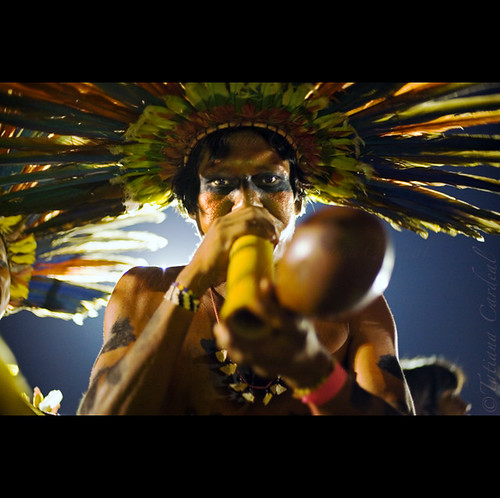
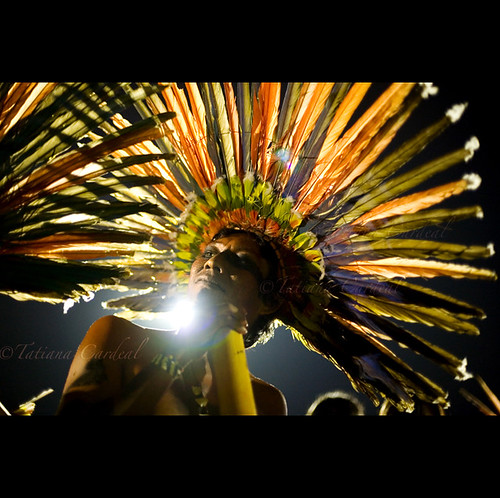
> Image of a Bororo man scaring me with his flute,
during the Indigenous National Festival.

2008/06/15

steps


Copyright © Tatiana Cardeal. All rights reserved.
Reprodução proibida. © Todos os direitos reservados.


"What is an adult?
A child blown up by age."
Simone de Beauvoir

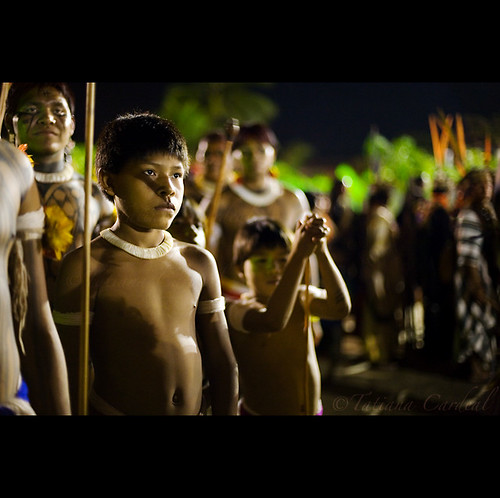
Boys and men,
future and warriors,
from Xingu, the beating Amazonia's heart,
during the Indigenous National Festival.

2008/06/04

exploring


Copyright © Tatiana Cardeal. All rights reserved.
Reprodução proibida. © Todos os direitos reservados.


New angles for a visual language, as an offer,
to communicate how we see and feel the world to others


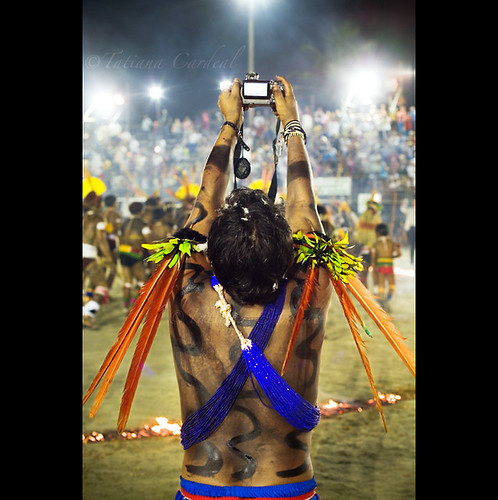
A young Yanomami photographing the cerimonial dance of the Xingu Nations, at the VIII Indigenous Festival.

2008/05/26

the river flow


Copyright © Tatiana Cardeal. All rights reserved.
Reprodução proibida. © Todos os direitos reservados.


A man from Xingu dances
flowing with other groups,
during the Indigenous National Festival.
.
.
.

"What will be left of the Xingu river for the people of Xingu?
from Amazon Watch

Brazil's state dam company, Electronorte, is moving ahead with plans to build one of the Amazon's most controversial development projects - the Belo Monte dam on the Xingu River in the state of Pará. The Belo Monte dam replaces an old proposal for hydroelectric construction on the Xingu, abandoned over a decade ago in the face of massive international and national protest."

2008/05/19

forever


Copyright © Tatiana Cardeal. All rights reserved.
Reprodução proibida. © Todos os direitos reservados.


Girls Gavião Kyikatêjê.
They are Hãwykyderi and Purukwyi.

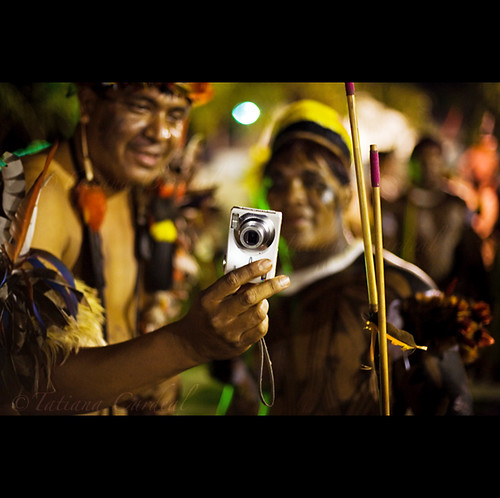
I saw them enjoying their own picture in a small digital camera,
I instantly aimed my camera,
they instantly aimed their eyes for me
.
.

a picture forever
in my soul

2008/05/18

the development


Copyright © Tatiana Cardeal. All rights reserved.
Reprodução proibida. © Todos os direitos reservados.


and social changes...
cameras and arrows.

About some things, I feel so lucky to be a testimony.
.
.

Finally, many Brazilian Indigenous People from different groups
are discovering the photography and having access.
Finally they will be able to be the
protagonists of their own history.

Here a Wapishana men shows their own picture to a Kuikuru man.
It's so clear why we all love development...

2008/05/16

in the dark


Copyright © Tatiana Cardeal. All rights reserved.
Reprodução proibida. © Todos os direitos reservados.


I was inside the cabin when I saw this Pareci (Haliti) woman
during the Indigenous National Festival, 2008.
.
.

Marina Silva, the last environmental voice of resistance in Lula's government resigned this week as Brazil's environment minister. She says she lacked the necessary political support to protect the Amazon.
She was the only voice defending that the Brazilian economic development can't be obtained at any price, specially the fragile Amazon area, while the social politics of the government are pressuring all to create a big show using the "PAC" (Programme for Accelerated Growth), to produce the illusion of a developed and emergent country.

"Brazil is losing the only voice in the government that spoke out for the environment," said Sergio Leitao, director of public policy for Greenpeace in Brazil. "The minister is leaving because the pressure on her for taking the measures she took against deforestation has become unbearable."

National and international agribusiness men, woodcutters, transgenics producers, miners owners, large constructor companies and the rural bench are all celebrating.

I'm feeling as an orphan.

night sun future


Copyright © Tatiana Cardeal. All rights reserved.
Reprodução proibida. © Todos os direitos reservados.


Bororo people cannot live in homologated land. Although to have its demarcated territory, the Bororo of the land Jarudori (Mato Grosso state) is obliged to live spread in other lands of its people, because its traditional area is invaded by squatters. Invasions, violence and epidemics - of tuberculosis and measles - had contributed for exit of many of the Bororo families who lived there.

> Indigenous National Festival at Bertioga city, 2008.

2008/03/24

protagonists of their own history


Copyright © Tatiana Cardeal. All rights reserved.
Reprodução proibida. © Todos os direitos reservados.


I took this portrait at the VII Indigenous Festival, 2007, where for the first time I was working beside a Kuikuro and a Xavante videomaker, a Karaja photographer and a Yudja sound recorder. Documenting the Festival since 2005, this was the first time that I've worked with a group of Indigenous People documenting their own Festival, and this certainly means a strong cultural change.
I usually show links (at the right column of this Blog) for other Natives Blogs and websites, and they have been increasing fast.

Soon, I hope they will be able to show to the world their own productions and finally their own vision of history, something that is really missed in Brazil. They will also be able to develop more structures to defend themselves and their autonomy.

Here goes some interesting information (sorry, it's my translation) from the USP website (University of Sao Paulo), wrote originally by Francisco Angelo, about the seminar that is starting tomorrow, the II Mídias Nativas (II Native Media), that will join Indigenous cultural producers, professors and media cultural producers from communities, living at the periphery and inequality of Sao Paulo:

"To create a site or blog showing his life or produce a short video and placed it on the web are now more than common practice for most young people of large Brazilian cities. But what we would say if it was done by bloggers and videomakers from indigenous communities of the Amazon or Canada? There are these processing experiments possible by new communication technologies that will be presented at the second edition of the Native Media, seminar which will be held in Sao Paulo between days 25 and March 27.

In the event, designed by the Research Center of Public Opinion in Contexts Digital (Cepop / Atopos) of the School of Communications and Arts (ECA) of USP, members of ethnic groups such as Guarani, Terena and Xavante will share their experiences media, which are the publication of books, production of radio programs within the villages and reach the digital production more explicit, such as CDs, Websites, Nets and blogs. Also will be present representatives of natives from Canada, where similar projects have been developed by the people Algonquines and Atikamekw.

"What is happening today is a revolution. It is the power of the press ", defines Massimo di Felice, a professor of ACE and one of the organizers of the meeting. For him, the new digital communication technologies represent an unprecedented experience for people before "invisible" as the locals: to be the protagonists of their own history. "For 500 in many years, the Indians in Brazil were the object of policies on the part of governments, FUNAI, NGOs. Today, with the help of the Internet, they have the opportunity to make direct diplomacy, without the intermediation of the organs and entities that tutelage. They even disclose their texts, their culture, and come in contact with international organizations, for example. "

Indigenous People and young population from the periphery
At the first Native Media, which occurred in 2006, several texts of indigenous authors then presented were gathered and published in Italy, in the form of the book Indiografia. This second edition of the event has broadened the issue of indigenous peoples also for the young people of the suburbs of large Brazilian cities, as Ronaldo Costa and Elieser Santos. They created the Canal do Motoboy, a virtual daily journal where motorcyclists write and publish photos generated by mobile phones on their day-to-day in the middle of the chaotic transit of Sao Paulo city.

For Di Felice, this is a clear signal that the role electronics that are changing indigenous people is a fact worldwide. "Today, any individual can produce their own content and make it available online for the whole world. This reverses the various models of communication classic which separated clearly an emitter, the 'owner' of the information, the receivers, "says Massimo.

Apart from the changes in culture communicative, Massimo also points to a qualitative change of citizenship. The web, he said, allows people who live in the same locality is aware, to organize themselves and, above all, create ways to act on the environment in which they live. "The digital culture is promoting an activism, with implications, I would say, for the explosive politics. People are going to have a relationship of direct action on its territory, without going through the traditional forms of authority. It is a production of a new form of citizenship, more collaborative and participatory, ".

2008/03/15

future


originally uploaded by Tatiana Cardeal.
Copyright © Tatiana Cardeal. All rights reserved.
Reprodução proibida. © Todos os direitos reservados.

A Yawalapiti baby was dreaming during the ceremony...
I was dreaming with her future.


Pontos.de.Vista (Points.of.View) is a Portuguese website about photography showing collective exhibitions, individual portfolios and invited photographers, where I spend a lot of time looking through really nice photographers body work.
I was honored by their invite, as a guest author, to show some of my work there.
You can see it at this link: "Incendiary of Souls".

Many thanks to Sofia Quintas and Paulo Rodrigues (photographers and leaders of Ponto.de.Vista) for this opportunity, and specially to contribute with the memory of the Indigenous Peoples culture, that are constant living such a strong transformation in Brazil.

2007/11/27

Gaia


originally uploaded by ©Tatiana Cardeal.


This Krahô mother reminded me about the old myth of Gaia, Goddess of the Earth.
wiki/Gaia Interpretations

Krahô People is also called Mehim.
They live at northeastern of the Tocantins state,
and were about 2.000 people (in 1999) .

>> Indigenous National Festival at Bertioga city, 2007..... (slide-show link)

Copyright © 2007 Tatiana Cardeal. All rights reserved.
Reprodução proibida. © Todos os direitos reservados.