2008/12/19

the cycle


Copyright © Tatiana Cardeal. All rights reserved.
Reprodução proibida. © Todos os direitos reservados.


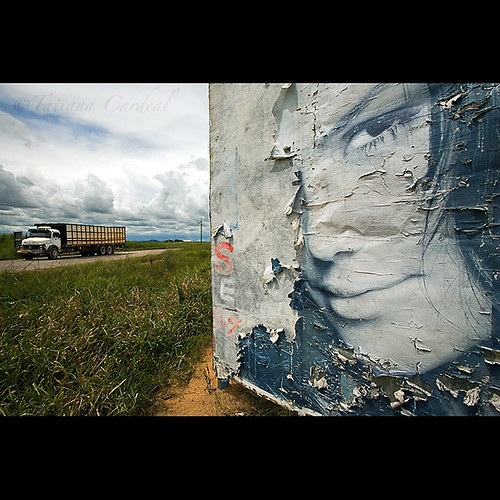
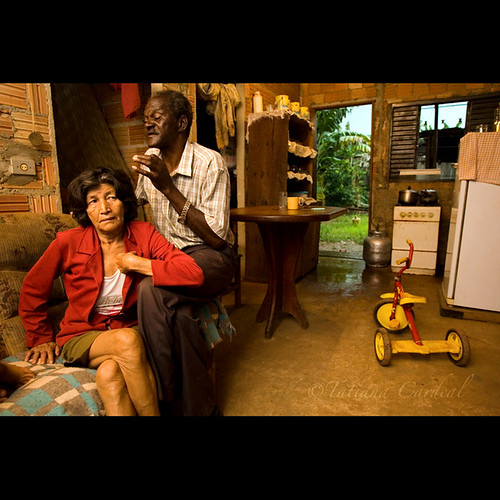
Many mothers and grandparents of young people who were sexually exploited share a history in common: rear children and grandchildren who never knew their own father.
At BR-163, several cities were born of goldmines and activities that attracted outsiders, temporary workers with no local ties. It is a cycle that repeats itself.

Young girls become pregnant from men that never return. The children are reared without a family structure, and are often abandoned with grandparents or sold to networks operating in other states or countries.

Many of the children sexually exploited in the region are sons and daughters of this vicious cycle.

Check out my website, the BR-163 Highway's gallerie, for more images and information.

2008/12/18

young victim


Copyright © Tatiana Cardeal. All rights reserved.
Reprodução proibida. © Todos os direitos reservados.

At BR-163, the young girl was hesitant to report how, as to the age of 15, after being sexually exploited by a year, she managed to escape by the back window from a brothel, with 8 months pregnant, rescued by her own mother.

Gender and race are themselves aspects structuring the logic of the market for sex.
Projects already implemented show that the vast majority of victims of sexual exploitation, tourism and trafficking are the female, black, mulatto and mestizo.

A former authoritarian and sexist culture still existing in the Brazilian society creates inequality in the relationship between gender and promotes an image of women as mere sexual object, subject to be purchased or used. The crystallization of this strengthen the concept of a female body offered as a supply, something natural - for both adults as for children and adolescents.

2008/11/18

consuME


5a. scars 5b. scars 5c. scars
5d. scars 5e. scars
Copyright © Tatiana Cardeal. All rights reserved.
Reprodução proibida. © Todos os direitos reservados.


During a research about the sexual commercial exploitation of children and adolescents on Brazilian roadways , this set of images was born as a perpendicular set from my documentation of the issue.
Those images, old billboards around the BR-163 Highway, were always calling me, sending me subtle messages, like whispers that I couldn't silence.

According the Brazilian ANDI's documents (Childhood and Adolescence Rights News Agency Network), the consumerist pressure exerted by the media, mainly by the advertising industry, impose patterns of consumer behavior often inaccessible to a large population, and especially the children and youth. The search for such patterns represent in many cases one of the factors for approval among children and adolescents and networks of sexual exploitation.

2008/11/07

voiceless


Copyright © Tatiana Cardeal. All rights reserved.
Reprodução proibida. © Todos os direitos reservados.

Many rural households are affected by the sexual exploitation of children and adolescents on the Brazilian roads. Most times, they are sons and daughters of peasants who migrate from rural areas, and end up being exploited on the highways.

It is a portion of the population socially vulnerable, voiceless and without access to basic rights of citizenship. At the root of the problem are poverty and social exclusion: unemployment, malnutrition and hunger, the destruction of the family, the poorly educated family, and children and teenagers out of school.

The networks that take advantage of activity, linked to pornography, sex tourism and child sexual exploitation, is usually organized within the country, in cities with 5 thousand and 100 thousand inhabitants.

2008/11/03

vulnerability


Copyright © Tatiana Cardeal. All rights reserved.
Reprodução proibida. © Todos os direitos reservados.


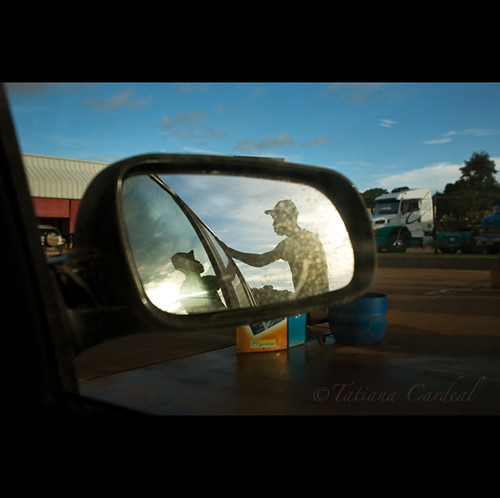
The service stations are the most vulnerable sites to sexual exploitation of children and adolescents on Brazilian roadways.

The conditions of the offered services at these places reflect the very bad situation of the drive truckers, and also a silent complicity in relation to sexual exploitation.

Indirectly, the owners of service stations benefit it as a source of income for their business.

2008/10/28

clients


Copyright © Tatiana Cardeal. All rights reserved.
Reprodução proibida. © Todos os direitos reservados.


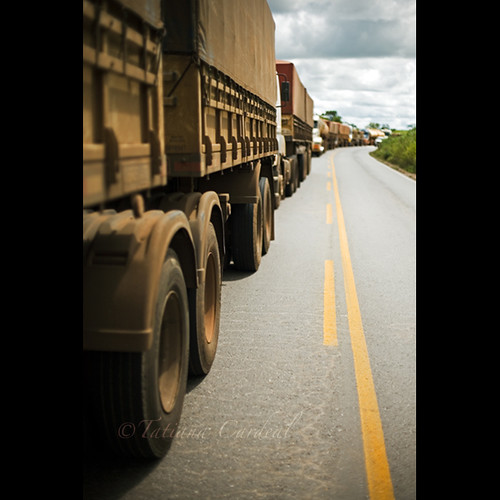
Drive truckers are the most frequently clients of the children and teenagers living
in sexual commercial exploitation situation at the Brazilian roads.
Responsible for transporting more than 60% of all freight moved in the country, these professionals spend most of their life in the driver's seat of the truck.

According a large national research developed by Childhood - Brasil with the Federal University of Rio Grande do Sul, drive-truckers consider themselves marginalized, eat and sleep poorly and stop at places with lack of infrastructure.
More than a third of them admitted having participated directly in a situation of sexual exploitation of child or adolescent, often with no clear idea of what this means.

Check out my website, the BR-163 Highway's gallerie, for more images and information.

2008/10/20

rainbows and shadows


Copyright © Tatiana Cardeal. All rights reserved.
Reprodução proibida. © Todos os direitos reservados.

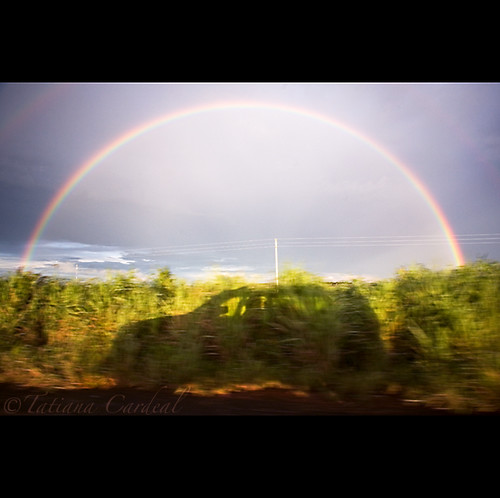
BR-163 Highway is one of the main roads cutting the heart of the Amazon.

BR-163, which is slated to be paved as an export corridor for soybeans via the Amazon River, traverses an area that is largely outside of Brazilian government control.
A climate of generalized lawlessness and impunity prevails, and matters related to environment and to land tenure are especially unregulated.

Rainbows and shadows were guiding my way during the travel on this emblematic highway.

Check out my website, the BR-163 Highway's gallerie, for more images and information.

2008/10/05

Spreading the history

James Nachtwey reveals his TED Prize wish.
The issue is Tuberculosis, which has been mutating because of inadequate treatment in a new form: Extreme Drug Resistant Tuberculosis.
James worked the past 18 months to document its impact, and now it's making a call.


Visit xdrtb.org for more details and to take action.

2008/07/22

Prestes Maia | Opening in Los Angeles August 9th


Solo Exhibition
Prestes Maia:

Opening August 9 6pm to 8pm

August 9 to October 3 2008

Alegria Gallery
2737 W Sunset Blvd
Los Angeles, CA 90026
323.454.4200
9to5 MF


A Diary of Exclusion

The Alegria Gallery, from Art and Shelter, will be exhibiting a group of photographs from the Prestes Maia essay. These images are fragments of a visual diary that I have been keeping at the Prestes Maia occupation at the heart of the city of Sao Paulo, during almost three years (2005 to 2007).

The site was considered the largest vertical occupation in Latin America. The building was an old textile factory abandoned more than 20 years ago, and the owners owe millions in taxes to the municipal government. Some 2.000 people were living there, members of the Downtown Homeless Movement, which is led by 10 women from various occupied sites in the city. The groups, well organized and articulated are formed by thousands of people who formerly lived on the street, in squares or under bridges and overpasses. Like an army without shelter, they founded the Homeless Movement not only as a way to struggle for the right to housing, but to restore their own dignity, unraveled by lack of care and social segregation.

There is tremendous prejudice in Brazil against the homeless, who are often accused of being "rabble rousers" and "invaders" of empty and abandoned buildings.There are more than 400 sealed or under utilized buildings in downtown Sao Paulo. It is in these locations that the homeless want to live. Nevertheless, in recent years, "urban revitalization" projects have given emphasis to raising real estate values, and there is no room for the homeless. They are evicted towards the periphery or sub-human life in cortiços – precarious urban dwellings with many residents in tiny spaces. These revitalization projects sponsored by the city government and private companies (
pressure of property speculation) do not give priority to reducing inequalities, but to exclusion, a social apartheid, which often includes violent actions from shock troops, security forces and private security.
These images seek to show that the homeless are honorable people seeking the inalienable right to a dignified life.


Prestes Maia Occupation now

After almost 5 years of occupation, constants suspensions of evictions, national and international mobilizations, in May 2007, a meeting joined leaders from federal, state and municipal sphere, giving a new direction for the Prestes Maia families. After negotiations, a progressive and pacific withdrawal happened and the occupation was closed.

Many had moved to other buildings, small apartments at city's downtown with a provisory support of the federal government, and are still waiting the promise of the negotiation: reform and rent for fair values social habitations for them . Other group of families accepted the offer to move out of downtown, to live in the periphery of the city. Some other families just moved to other occupations from the Homeless Movement in the city, and continue fighting.

Since July, 2007, the Prestes Maia building is still closed, sealed with concrete blocks.

These photos are fragments of this history of S o Paulo society, where I was born. They are not only testimonies, but also elements of communication that I hope can raise awareness and promote the approximation of social classes. They strive to contribute to the transformation of urban space into a location that does not segregate, but to the contrary, unites people around a common good.
2008/06/27

do not play


Copyright © Tatiana Cardeal. All rights reserved.
Reprodução proibida. © Todos os direitos reservados.


Pollution Foundation

"The pygmies, who have small bodies and large memory,
recall the days before the time, when the land was above the sky.

From the earth was felling on the sky an incessant rain of dust and garbage,
soiling the home of the gods and poisoning their food.


The gods were, there was an eternity, supporting such a tallowy discharge,
when their patience were over.


They sent a lightning, which left the land divided in two. Across the opened earth they threw high the sun, the moon and the stars, and through this way they also rose. And then on top, distant from us, safe from us, the gods founded their new kingdom.

Since then, we are below."


By Eduardo Galeano,
a piece of his brand new book*
"Espejos. Una historia casi universal"
("Mirrors. A history almost universal")

* Apologies by my translation, originally published at "Le Monde Diplomatique".
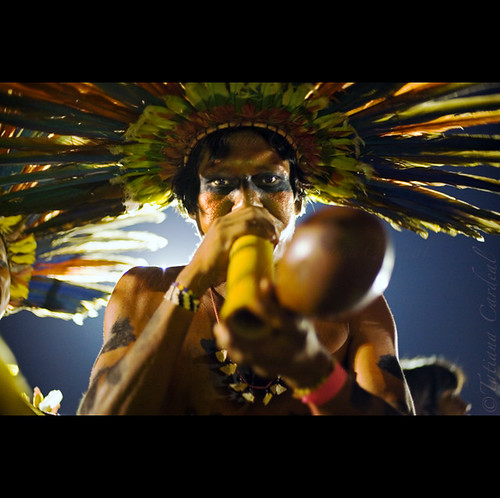
> Image of a Bororo man scaring me with his flute,
during the Indigenous National Festival.