I support the Indigenous Cause


In Support the Indigenous Cause

Copyright © Tatiana Cardeal. All rights reserved.

Reprodução proibida. © Todos os direitos reservados.

The model of development that Brazil was rising in the last years could have some strong positive points, but some issues related with the environment, sustainability, violence and disrespect of the Indigenous and Traditional Communities rights (as the Quilombolas - historic afro-brazilian communities) are just going worst.

Last July and August I traveled about 4000km on the Brazilian east boarder, between Bahia' South state and the North of Espírito Santo, visiting many Indigenous and Afro-Brazilian communities (Quilombolas). I was shooting for a research that will be published soon. The main picture is really bad. I also met and interviewed anthropologists, professors at universities and researchers, and what I've seen is disappointment when not revolt.
A meeting formed by a large national group of anthropologists to write a collective manifest for the government was recent planned to happen in Florianópolis. I'll updated about.

You've probably heard about Belo Monte Dam and other projects in the Amazon area, troubles with deforestation, monoculture, and lands issues in the country. The Brazilian Association of Judges for Democracy (www.ajd.org.br) released a campaign named "I Support the Indigenous Cause" and are asking for signatures.

I support the Indigenous Cause
Against the PEC 215 (proposed constitutional amendment)
Demarcation of the Indigenous Lands
Urgency in Court Decisions

There are more detailed information rolling the bar on this link.
I Support the Indigenous Cause
Check the link for other languages:
Português / Español / Français / Italiano / English


If you agree, you can sign the petition that will be sent to the Supreme Court,
the President of the Republic, the Senate and the House of Representatives.

Please, share the campaign with your contacts.

________________________

Eu Apoio a Causa Indígena 

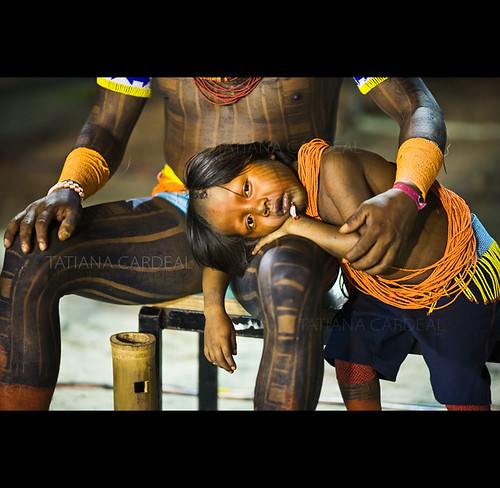
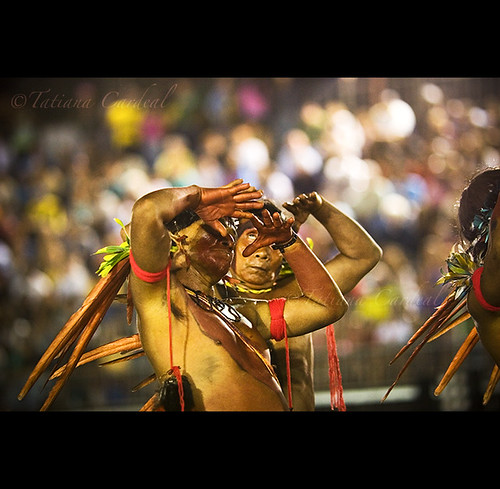
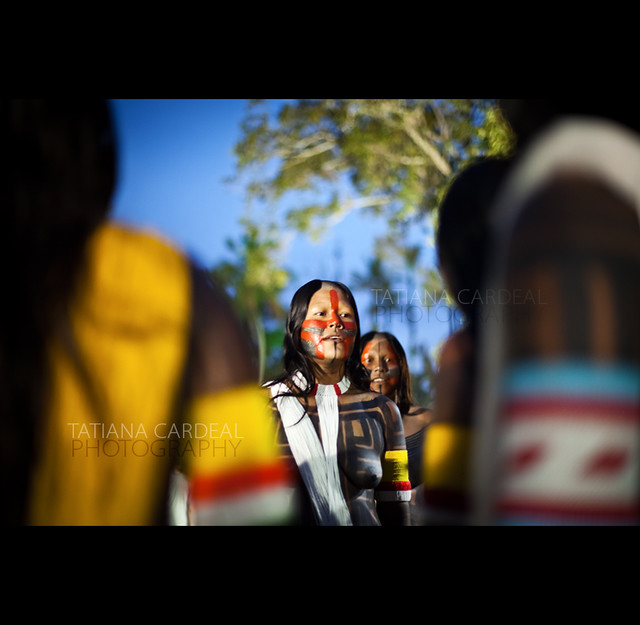
Photo: > Kayapó women were singing and dancing their traditions during the Indigenous National Festival, 2012. Bertioga, SP, Brazil.


Santiago, Chile: ACTIVISTA Exhibition


No, I'm not dead. I just have been very negligent with my blog, I now.
But here I am, filling the black screen with some news and not so news. 

First thing to tell you: I was featured at Citypulse ACTIVISTA issue, released in mid-March. The issue presented 16 pages with an overview of my photo work during protests from 2000 to 2011. I will add some on this blog soon, but now the most important: if you are around Santiago during September and first week of October, this should be the last weeks to visit the ACTIVISTA Exhibition at the PUMA LAB and check some of my photos there.


ACTIVISTA - The Exhibition

Santiago, Chile

Includes part of the Citypulse collection: conceptual photography, audio and video developed by this international group, portrays the social movements that are multiply throughout the world, gaining a decisive role in the expression of citizens locally and globally. The work is structured from the eyes of 44 artists from 16 countries, who shape multicultural track the phenomenon from an experimental perspective. This record includes a book, a video (pre-released in August this year at the Festival of Aarau, Switzerland), a photographic collection, a website, and geolocated platforms with audio and video recording. Additionally, the photographic pieces exhibited in PUMA LAB include augmented reality interface that allow viewers to explore the complete works pointing their mobile images displayed.

September 5th to October 7th
GAM - Centro Cultural Gabriela Mistral - PUMA LAB
Avenue L. B. O'Higgins 227, UC Metro
Parking Subt. by Villavicencio 354
Santiago, Chile

activista.citypulser.com

Soon, more updates!


Inauguración EXPO ACTIVISTA! from PUMA LAB on Vimeo.
Inauguramos la exposición ACTIVISTA! en PUMA LAB que incluye parte de la colección conceptual de fotografía, audio y video desarrollada por Citypulse y que retrata los movimientos sociales que se multiplican a través del mundo, adquiriendo un rol determinante en la expresión ciudadana a nivel local y global. Ojo con la interfaz de realidad aumentada que contienen tanto las fotos como las postales de la EXPO, que permiten a los espectadores recorrer la obra completa apuntando sus móviles a las imágenes expuestas.


Temporal Beauty


This first semester I've been traveling much more than I expected: Argentina (twice), Iguazu Falls, New York City, Uruguay... so, apologies for the long absence here. Since my last post in February I did these trips, went back to Argentina shooting the Northwest area: Salta and Jujuy Provinces, Cataratas do Iguaçu in the Brazilian South, classic icons of South America. It was a new assignment for the Sunday Times Travel Magazine this year, an amazing road trip, and they has just published this Argentina feature named "Tango for Two". You can check it out in the lastest July issue.

These tear sheets above were featured a few months ago inside the NATURA Magazine, previously designed for the printed magazine, and launched for IPad (March/April, 2011). I'm not quite sure if it was publish exactly like I'm showing here (surprisedly, after hard trying to get a pdf from the essay, I still couldn't get from the publishers the final version. According them, due server troubles.)
But well, this was the approved layout, so, I believe (and expect) it should looks like that.

These photos are a piece of an essay I started to shoot years ago and had never finished. Some of you might remember those pictures displayed at my Flickr's page.
Images of women & advertisement have always called my attention, usually producing an avalanche of questionaries, thoughts and feelings. For me it's about time, patterns, sensuality, decadence, abandone, consume, pressure, scars. But these specific bilboards were shot in the Brazilian countryside, at the BR-163 and towns nearby the frontier of Mato Grosso and Pará States, while I was traveling for an NGO on a research/ reportage about sexual exploitation of children and teenagers on the roads.

Old bilboards whispered in my ears all the journey. I couldn't silence them.


Paris: Photo Exhibiton - No to discrimation in education

=O)
brazilian children's day maloca's gate- Amazonas
Three of my pictures are showed in this collective exhibition,
and the opening is today (Feb 15th), at the UNESCO Headquarters.
Come to visit if you are in Paris!
> captions for these images are at the photo links.


Exhibition illustrates plurality in education from
a Latin American and Caribbean view

by CLADE
Giving visibility to the issue of discrimination in education is key to overcome this harsh reality. This is the core objective of the photography exhibition No to discrimination in education! Views from Latin America and the Caribbean, which will be presented at UNESCO Headquarters, Paris, from 15th to 21st February, 2011.
The exhibition will move to the Novotel Tour Eiffel on the 22nd, commemorating the 4th General Assembly of the Global Campaign for Education (GCE), an event that will gather more than 150 activists working towards the right to education all over the world.

The exhibition, featuring 34 photographs taken by various artists, is an initiative of the Latin American Campaign for the Right to Education (CLADE). This roving exhibition was already presented in Sao Paulo, Brazil (May 2010), and in Buenos Aires, Argentina (September 2010).

“The photographs show scenes of daily school life in different corners of Latin America and the Caribbean, giving visibility to the reality of these groups and people who are systematically discriminated within and without the education system. This way, while celebrating difference, the exhibition also aims to point out the still remaining challenges a decade after the signature of the Education for All commitments in Dakar, so that the right to education can become real for all people”, says Camilla Croso, General Coordinator of CLADE.

This exhibition captures the realization of the right to education of indigenous and African-descendant populations, of persons with disabilities, of persons deprived of freedom, of girls and women, of early childhood and young people and adults, as well as education in contexts of displacement and in rural and peripheral urban areas. The exhibition also highlights the situation in Haiti, a country ravaged by an earthquake in January 2010."

Information:
Photography Exhibition:
No to discrimination in education! Views from Latin America and the Caribbean

Date and Venue:
February 15-21, 2011, UNESCO Headquarters. 7 Place de Fontenoy, Paris VIIème, Paris.
February 22-27, 2011, Novotel Tour Eiffel. 61 Quai de Grenelle, Paris.


tear sheets


The End of Violence

First image is from the World Pulse Magazine (Global Issues Trough the Eyes of Women), that had just arrived at home. So well printed and beautiful, this winter/spring issue is entitle Embody.
The picture was done at Caracas, during the World Social Forum open march, a few years ago, a group marching for women rights and against violence. Bellow, the original image without crop.

women in action

"Women who are victims of various kinds of gender-related violence and discrimination will testify at a 'world tribunal', as part of the Latin American phase of the VI World Social Forum, in Caracas."


Southern Exposure

A photo taken on board a passenger boat on the Upper Rio Negro, at Amazonas state, illustrates the latest issue of New Internationalist magazine, a British publication with focus on issues related to global justice, sustainability, poverty, social responsibility and social inequality.

day dreaming - Amazonas

The column Southern Exposure highlights artists and photographers from the majority world. It's the fourth contribution I did with the magazine's column (previous can be seen at this link). On this issue I wrote about the natural cycles of the region and their importance for the communities living along the curse, the balance of the resources offered by the river and the jungle.


Back to the point: Belo Monte Dam

warrior's light
Copyright © Tatiana Cardeal. All rights reserved.
Reprodução proibida. © Todos os direitos reservados.


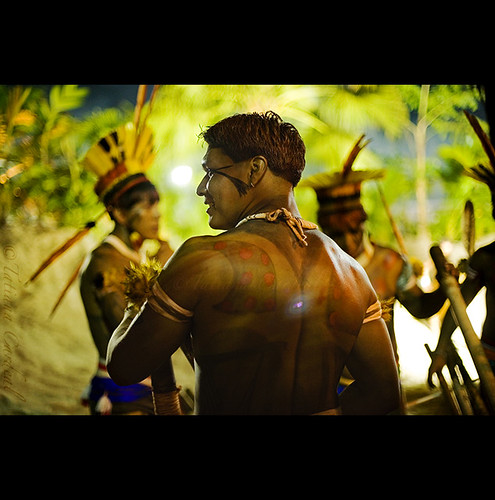
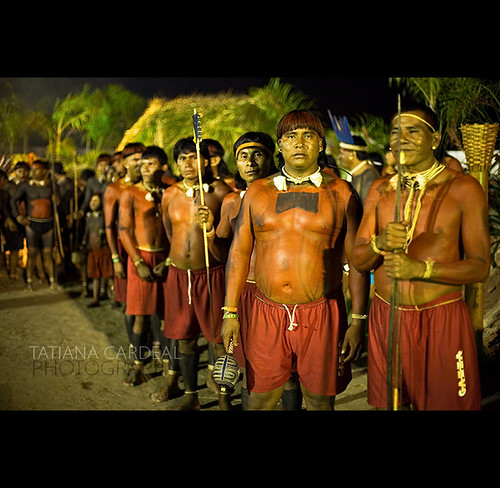
> Yawalapiti warriors live along the Xingu River, at the Xingu Park. I photographed them during the Indigenous National Festival.


While watching the bad day that people, photographers, journalists had in Cairo today, I was observing the arrogance of Muraback's govern and feeling shocked with all the violence. At the same time, I needed to write again about another trouble in another govern, that in a way, is also showing arrogance and total disrespect from it's people: Brazil and the way the Belo Monte Dam have been conduced.

A recent partial license grant given by an interim president of IBAMA (Brazilian Institute for Environment and Natural Renewable Resources), allowed the construction camps and site of the hydroelectric plant of Belo Monte in the Xingu River, at Para State - and has generated a series of reactions against the decision at the media. Federal prosecutors had recommended to IBAMA to not fragment the licensing to speed up the process because the requirements for the previous license had not been completed. A partial license (which should be part of a full license) does not exist in Brazilian environmental legislation.
Not enough, the Federal Public Ministry estimates the number of people affected to be about 40,000 - including traditional and indigenous populations!

Also a controversial fact was the departure of then President of IBAMA, Aberlardo Bayma, on January 12. Bayma justified the resignation saying that his decision was motivated by "personal reasons". However, rumors on the media tell that in recent meetings with Eletronorte, Bayma refused to grant the dam's final construction license, arguing that IBAMA could not grant the document since the project is full of environmental disputes.
Belo Monte's socio-environmental viability is also considered the reason for former Environmental Minister (and candidate in the 2010 presidential elections) Marina Silva stepping out of office in 2008.
Well, there are a lot of new information going on media and social media every day, showing many irregularities, economics doubts, and some institutional explanations. A quick research on the web will add much more to this issue.

Meanwhile, many organizations, social movements, indigenous people, activists, anthropologists, economists, journalists, environmentalists, judges... and many like me, have been alerting and questioning if this dam is really needed, and what are the real costs of this project (economic, human and environmental). The answer is still a mystery. Too many doubts to put so many and so much in risk.

Enough from today! With all I've seen, one thing must be said: Muraback won't be forgot by the history for his choices and acts. The same will happen with the Belo Monte Dam in Brazil.

Mobilizations and online petition
Amigos da Terra, Amazonia.org.br, Amazon Watch, AVAAZ.org, Greenpeace, Instituto Akatu, Instituto Sociambiental, International Conservation, International Rivers, Movimento Xingu Vivo Para Sempre, and other organizations, have been incisive on their position against the continuity of the project in the way it's being developed. Some of them started campaigns.

  • On Twitter, mostly of them are spreading the rashtag #parebelomonte and #belomontenao to protest and call attention for the issue. Some tweets are sharing petitions to be signed.
  • Avaaz launched a large petition, you can sign here.
    "President Dilma promised in her inauguration speech to develop Brazil without damaging the environment. But the Belo Monte dam would be the opposite -- a massive environmental scar in the heart of the Amazon."
  • Save the Xingu River says, and can be signed here.
    "It would divert the flow of the Xingu River and devastate an extensive area of the Brazilian rainforest, displace over 20,000 people and threaten the survival of indigenous peoples."
"Now is a crucial time to take action to defend the Xingu River."

Sources: Global Voices , Survival International , Instituto Sociambiental , Ministério Público Federal do Pará , Avaaz , Movimento Xingu Vivo Para Sempre , Miriam Leitão.com

[ video ] Never late!


Copyright © Tatiana Cardeal. All rights reserved.
Reprodução proibida. © Todos os direitos reservados.


End of the holidays... beginning of a new year.
But never late, folks!

Click the photo to watch the video.

***A very special thank you for the followers!

Photo: El Afronte - Orquestra Típica playing at San Telmo street (Humberto 1º, 343), as they usually do on Sundays afternoon.


do we have a future?

do we have a future?
Copyright © Tatiana Cardeal. All rights reserved.
Reprodução proibida. © Todos os direitos reservados.


In the middle of so many debates about our presidential elections, sustainable development, social responsibility...
what would be the real future for Xingu People of Brazil?

Tuesday, October 26, the Movimento Xingu Vivo para Sempre (Movement Xingu Alive Forever), a coalition of over 250 organizations and social movements that oppose the construction of Belo Monte dam, sent to Dilma Rousseff and Jose Serra a letter requesting that they expose their projects about the controversial dam. It's time to hear answers from these candidates. We can strengthen the process, and let them know that the world is watching signing this:
Petition (english)
Abaixo-assinado (português)

You can also visit the Movement site here and support the cause at their social networks:
Movimento Xingu Vivo para Sempre

> Exhausted, a Kayapo child, during the Indigenous National Festival.

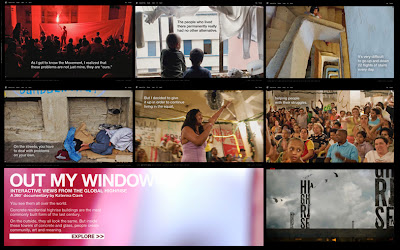
Out My Window - interative 360º documentary!


Out My Window is the first major global of HIGHRISE super cool multi-media collaborative documentary experiment at the National Film Board of Canada, directed by Katerina Cizek.
And I'm in!

Highrise is a project about the human experience in vertical suburbs, "exploring the state of our urban planet told by people who look out on the world from highrise windows... residents who harness the human spirit — and the power of the community...". These concepts approximated one of their editors, Heather Frise, to my documentary work at Prestes Maia Occupation (at São Paulo, Brazil), that was showed at this blog (and Flickr).

I contributed with some of my Archival Photos, images I took at the occupation during 2005 to 2007, that are showed on the "Neighbours" and "Highrise Squat", both pieces of Ivaneti's story. Sadly, I was just arriving in China (2009) when they first contacted me asking to make the records and new photos for Ivaneti's story, but couldn't follow them. Another photographer in São Paulo, Julio Bittencourt, that also worked at the P. Maia Occupation and knew the people did it, and his images looks so great!

The project worth a visit! Check it here.
Loved!


International Photo Biennale "TashkentAle-2010"


Art Week Style.Uz

October 9th - 14th

This a large-scale cultural and educational project of the Fund “Forum of Culture and Art of Uzbekistan” started in Tashkent.

The week started with the fifth International Tashkent Photo Biennale “TashkentALE 2010”, organized in cooperation with the Academy of Arts of Uzbekistan and Tashkent House of Photography at the Youth Creativity Palace.

I'm exhibiting a series with 10 photographs documenting Brazilian Indigenous People.
Works of photographers from over 40 countries are presented at the “TashkentALE”.

Events from the Arte Week are at the National Arts Centre, Youth Creativity Palace, Tashkent House of Photography, and galleries and exhibition halls in Tashkent and Samarkand.


whistles and snakes


Copyright © Tatiana Cardeal. All rights reserved.
Reprodução proibida. © Todos os direitos reservados.


A Photographer Showcase about my work was presented by the Culturazzi Website some time ago. At the time, I was leaving to China and didn't published it here. So, just wanted to share here their link, images were a bit distorted from the original, probably to fit their layout, but I appreciated the selection of images they did:

Beauty, Truth, and Sensitivity


I chose this image I took at Nairobi, Kenya, during the VII World Social Forum. A Tanzanian tribal sorcerer and his assistant, playing a traditional dance with a python, at the Moi International Sports Complex.
More dancers and drummers were coming playing whistles .
I can still hear their sound, their magic.


International Day of the World's Indigenous Peoples


Copyright © Tatiana Cardeal. All rights reserved.
Reprodução proibida. © Todos os direitos reservados.

Take a moment to participate in the International Day of the World's Indigenous Peoples.
Send a letter to the White House in support of the United States endorsement of the UN Declaration on the Rights of Indigenous Peoples.
See this link from the Indian Law Resource Center.

Endorse the UN Declaration on the Rights of Indigenous Peoples

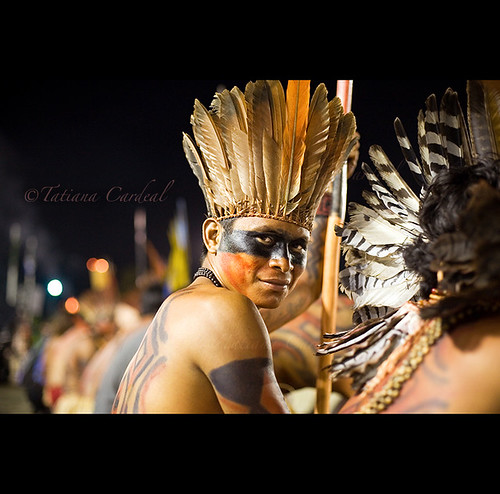
> photo: Xavante People, at the Indigenous National Festival.

Shawãdawa

Copyright © Tatiana Cardeal. All rights reserved.
Reprodução proibida. © Todos os direitos reservados.


A Shawãdawa men, also knowed as Arara do Acre, was happy at the Indigenous Meeting.

I'm also happy to tell you that after many letters that you sent this week, it finally happened the approval of the Draft Law on Conversion (PLV) 08/2010, at the Brazilian Federal Senate.
After the vote, the Indians moved, gathered at the entrance of the Congress and celebrated the victory, after almost two years of intense mobilization of indigenous leaders and organizations, calling for the end of the participation of Funasa.

With nearly 300 years of delay, the Senate approves creation of the Special Secretariat of Indigenous Health.
A historical neglect should start to be repaired.


yanomami ritual

yanomami ritual, Brazil
Copyright © Tatiana Cardeal. All rights reserved.
Reprodução proibida. © Todos os direitos reservados.


For the Yanomami, urihi, the forest-land, is not a mere inert space for economic exploration (of what we call 'nature'). It is a living entity, part of a complex cosmological dynamic of exchanges between humans and non-humans. As such, it today finds itself threatened by the reckless predation of whites. In the view of their leader:
"The forest-land will only die if it is destroyed by whites. Then, the creeks will disappear, the land will crumble, the trees will dry and the stones of the mountains will shatter under the heat. The xapiripë spirits who live in the mountain ranges and play in the forest will eventually flee. Their fathers, the shamans, will not be able to summon them to protect us. The forest-land will become dry and empty. The shamans will no longer be able to deter the smoke-epidemics and the malefic beings who make us ill. And so everyone will die."

Davi Kopenawa Yanomami
Information by: ISA
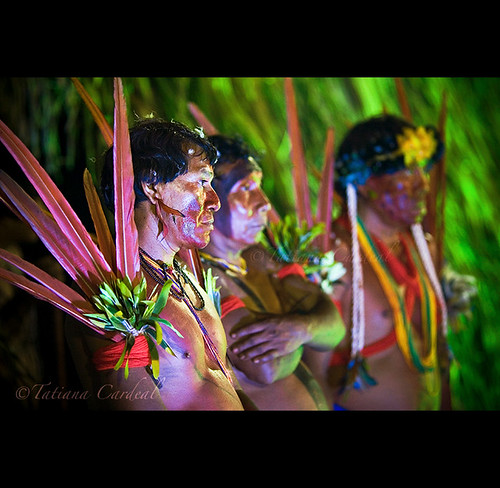
>> photo of Yanomami shamans at the Indigenous National Festival, Bertioga, Brazil.
Please sign the letter to the Brazilian Senate and help.
They still need many signatures:
Rainforest Foundation / petition

_________

Saiba mais e participe assinando no link abaixo:
Instituto Socioambiental: Saúde Indígena

yanomami alert


Copyright © Tatiana Cardeal. All rights reserved.
Reprodução proibida. © Todos os direitos reservados.


"Healthcare programs for indigenous peoples in Brazil are overseen by a federal agency, called FUNASA, under the Ministry of Health. In Northern Brazil, the Yanomami have denounced an alarming increase in malaria cases, exacerbated by illegal gold mining. Currently, medical assistance is not getting to the communities because of bureaucratic hurdles around the approval of airstrips in the Yanomami Area – something that has never been a problem either there or elsewhere. Indeed, many of the scandals involving FUNASA have taken place within the Yanomami health program. In the Javari Valley, a vast indigenous area in the western Amazon, hepatitis and malaria epidemics are ravaging the Kanamari, Matis, Marubo Tsohom-dyapa, and Korubo, as well as isolated groups that live in the region. "

For these and other reasons, indigenous organizations, organizations on human rights, racial equality and policies for women are mobilizing for what the Senate does not change the Bill of Conversion and vote before the 4th of August, when expiry of the term MP 483.
We hope that through a new, independent government office, indigenous healthcare will receive the attention it deserves.

Please sign the letter to the Brazilian Senate
Learn more and participate by sending the signing the petition at the link!
We need a lot of signatures and we have only four days.
Thank you!

http://www.change.org/rainforest_foundation/petitions/view/indigenous_healthcare_under_threat_in_brazil

>> photo of Yanomami people at the Indigenous National Festival, Bertioga, Brazil.

the things they said


edited: I had to removed the direct link for this video as it was making the blog too slow.

You can watch this cool video from Survival at this link.

For brothers and sisters.
.
.

Health and Happiness Project at the Amazon


Plateform published a selection of images from the series I took at the Health and Happiness Project (Projeto Saúde e Alegria) during a few days in the Amazon region. There's also an interview. The link above is for the English pages of the essay (for the French pages, click here).

Use this link to see more about the Health and Happiness Project published at this blog.


> Info:
▪ Projeto Saúde e Alegria
▪ Plateform Magazine
"PLATEFORM est un magazine pour exposer, s'exposer, se raconter et raconter. PLATEFORM ouvre le regard et s'ouvre aux talents. PLATEFORM apporte une double vision sur un thème, un lieu, une émotion, une idée."


Chinese memories

playing erhu
Copyright © Tatiana Cardeal. All rights reserved.
Reprodução proibida. © Todos os direitos reservados.


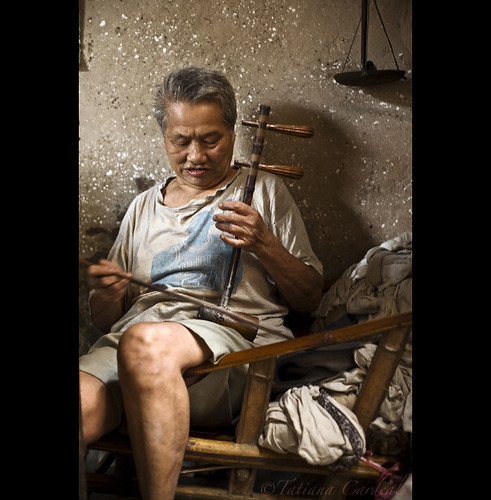
Walking at Fuli Ancient town alleys, I heard a music coming from an open door.
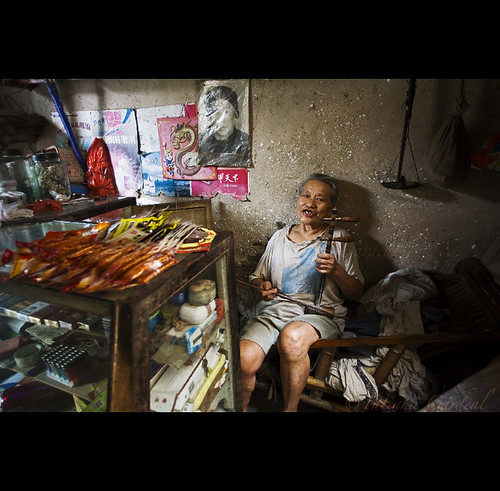
It was a small shop at a home, selling lighters, soap, cigarettes, candies... little things of everyday life of the village.
I though it was a radio playing an old Chinese song. Curious, slowly, put my head inside. I discovered that the beautiful song was coming from the her, the owner.

No spoken words, but a body language talk, the lady allowed to shot her portraits while I was fascinated with the magic sound of her handmade erhu, the scenery, it's particular smell, and well... her Chicago Bulls, Michael Jordan's 23 t-shirt.
Relaxed, concentrated on the music, almost ignoring my presence, she didn't stop a second.
It was impossible not start wondering about how the fast Chinese development will affect these people, the town, their culture.


The Erhu
The story tells that during the decades of 30 and 40 of the last century, at the Chinese city of Wuxi, a blind street musician was always seen playing an instrument with two strings and begging on the streets. Passers-by delighted with those tunes, stopped to listen.

The artist began to be known as "the Blind ABing". The instrument he played was the famous Erhu, also known as Chinese violin. Even today, whenever people talk about the erhu, they also speak of the Blind Abing, the two are inseparable in the minds of many Chinese.


the singer owner

back in the time
Copyright © Tatiana Cardeal. All rights reserved.
Reprodução proibida. © Todos os direitos reservados.


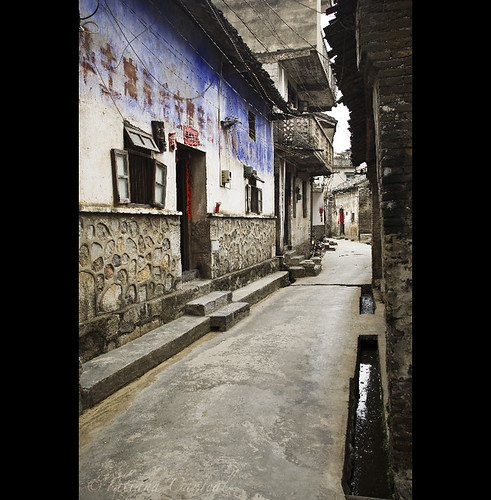
Fuli is a Ming Dynasty town built on the Li River's northern banks.
The village has a history of 800 years, narrow, winding cobblestone streets and ancient temples.


> Alley at Fuli Ancient Town, Guangxi Zhuang Autonomous Region, China.


little girl


Copyright © Tatiana Cardeal. All rights reserved.
Reprodução proibida. © Todos os direitos reservados.

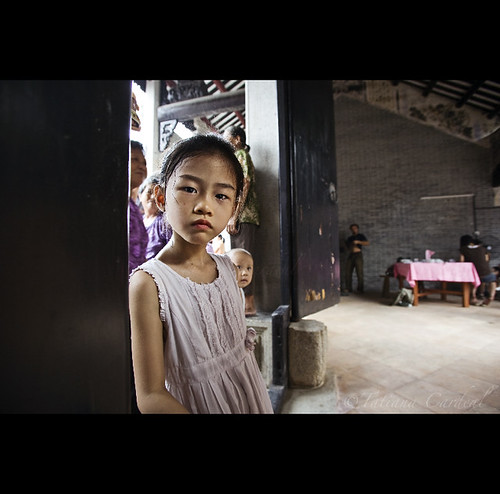
> Village on the suburban area of Guangzhou city, China.


Exhibition "Education is a right: non-discrimination in Latin America and the Caribbean"

brazilian children's day
Copyright © Tatiana Cardeal. All rights reserved.
Reprodução proibida. © Todos os direitos reservados.


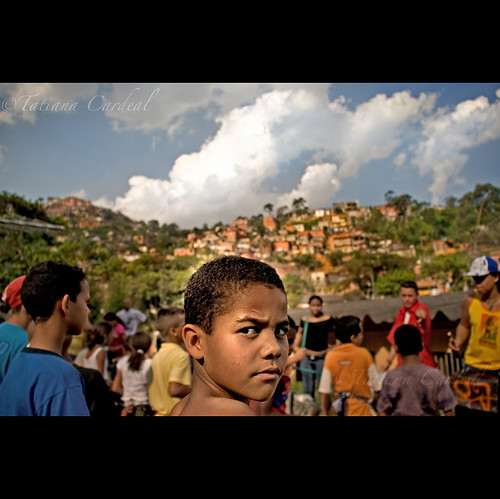
I made this picture a few years ago (2005), during the Brazilian celebration of Children's Day, where the ngo Children at Risk Foundation (CARF - Rede Cultural Beija Flor) developed a series of educational and cultural activities with children and youth in the region of Diadema, periphery of Sao Paulo.

This picture and the following two images, relating to the same topic, will participate this month in an exhibition that depicts the diversity within the school environment in Latin America and Caribbean.

maloca's gate =O)

"Held by CLADE in the campaign for non-discrimination in education, the traveling exhibit will bring together 36 images captured in different countries.

Give visibility to the issue of discrimination in education is crucial in order to recognize its existence and to think of ways to overcome this reality. In Brazil, for example, 97% of people recognize have some kind of prejudice against different groups in the school environment (FIFE). Thinking about it, CLADE held at the Memorial da América Latina a photographic exhibition in May.

With the theme "Education is a Right: the Non-Discrimination in Latin America and the Caribbean", the exhibition curated by photographer Maíra Soares, which brought together 36 images by clicking the various countries of Latin America and the Caribbean by names such as Brazilian photographer Gilvan Barreto and Argentina's Néstor López. The launch of the show, May 3rd, follows the opening of the 6th Assembly of CLADE.

The realization of the right to education for indigenous and Afro-descended, by people with disabilities, persons deprived of their liberty, pregnant teenagers and adults as well as the contexts of the field and on the periphery of cities are represented through the images. Wins highlighted the current situation in Haiti.
"The pictures show scenes of everyday school life in many parts of Latin America and the Caribbean, giving visibility to the reality of groups and individuals who have been systematically discriminated against, in and out of education. Thus, while the exhibition wants to celebrate the difference, you also want to point out the challenges that remain, even 10 years after the commitments to Education for All signed in Dakar, so that the right to education is realized for all people" says Camilla Croso, general coordinator of CLADE.

On May 6, from 10am to 12pm, the event has the participation of the UN's special rapporteur on the right to education, Vernor Muñoz, receiving the public, especially students and tutors, for a discussion of the topic discrimination in education.

In theaters until May 29, the exhibition is touring and will be displayed later in other countries of Latin America and the Caribbean."
(text: website from CLADE campaign)

Exhibition:
"Education is a right: non-discrimination in Latin America and the Caribbean"
At the Memorial of Latin America from 3 to 29, May, 2010.

Other images from this exhibition and media news (Brazilian links):
• Exposição discute discriminação na educação na América Latina e Caribe - Notícias R7
• Encontro debate educação na América Latina e Caribe
- Educação IG
• Exposição mostra a realidade das escolas da América Latina -
Educação UOL